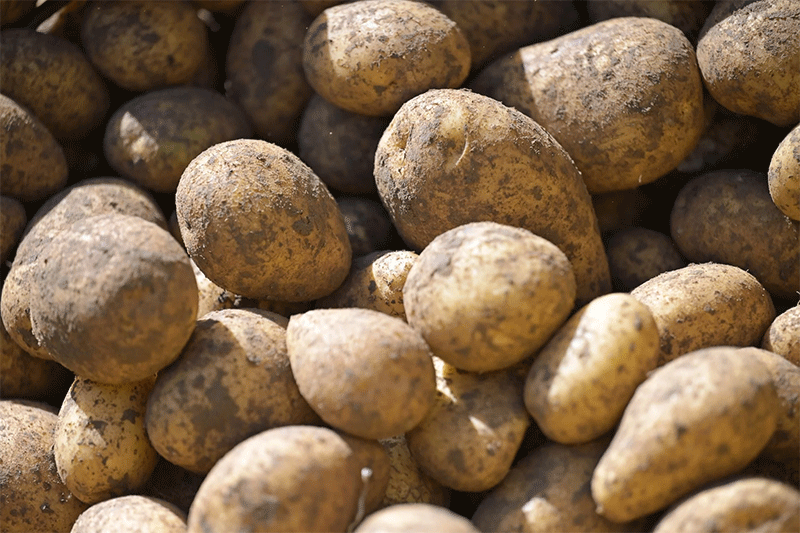
The potato’s journey to becoming Germany’s quintessential vegetable was anything but organic. Initially met with suspicion after its arrival from South America in the 16th century, the tuber’s underground growth habit and toxic above-ground fruits led to widespread rejection. Its breakthrough required top-down intervention. In the 18th century, Frederick the Great of Prussia famously enforced its cultivation, a historical example of state-mandated agricultural policy that successfully overcame consumer and producer resistance. This forced adoption laid the groundwork for a profound cultural relationship; today, Germans are sometimes colloquially called “Kartoffeln,” and the vegetable is indispensable to the national diet, particularly in its fried forms like fries and chips.
This historical foundation supports a massive modern industry. According to the latest forecast from Germany’s Federal Ministry of Food and Agriculture (BMEL), the 2024 harvest is expected to reach a substantial 13.4 million tonnes. This aligns with Germany’s consistent position as a top potato producer in the European Union. Data from Eurostat consistently shows Germany among the EU’s largest producers, alongside France and the Netherlands, with a long-term average annual harvest typically between 10-12 million tonnes. This year’s projected yield of approximately 160 kg per citizen underscores the crop’s immense scale within the national agricultural framework.
The Double-Edged Sword of a Bumper Crop
For consumers weary of food price inflation, a large harvest is unequivocally good news, typically leading to lower retail prices. However, for farmers and the broader agri-supply chain, a market glut presents significant challenges. While the BMEL’s report signals strong yields, a surplus can depress farm-gate prices, squeezing producer profitability despite high output. This dynamic echoes recent market volatilities seen in other European nations, where excellent growing conditions have sometimes led to financial distress for growers unable to cover costs.
The German potato sector’s heavy reliance on processed forms (chips, frozen fries, starch) provides a crucial buffer, creating a stable demand for specific varieties. However, the fresh market remains susceptible to these price swings. The projected harvest volume of 13.4 million tonnes will test the resilience of the entire value chain, from storage capacity to the strength of forward contracts, to ensure that the benefits of a plentiful harvest are shared equitably with those who produced it.
The story of the potato in Germany is a powerful lesson in agricultural transformation, demonstrating how policy, persistence, and palate can elevate a foreign crop to a national staple. The anticipated record harvest is a testament to centuries of agronomic refinement and market development. However, it also serves as a timely reminder that agricultural success cannot be measured by yield alone. For farmers and farm owners, true success lies in a balanced market that rewards their effort and investment. As Germany prepares to bring in its 160 kg per person bounty, the industry must navigate the delicate balance between celebratory abundance and sustainable profitability.
