
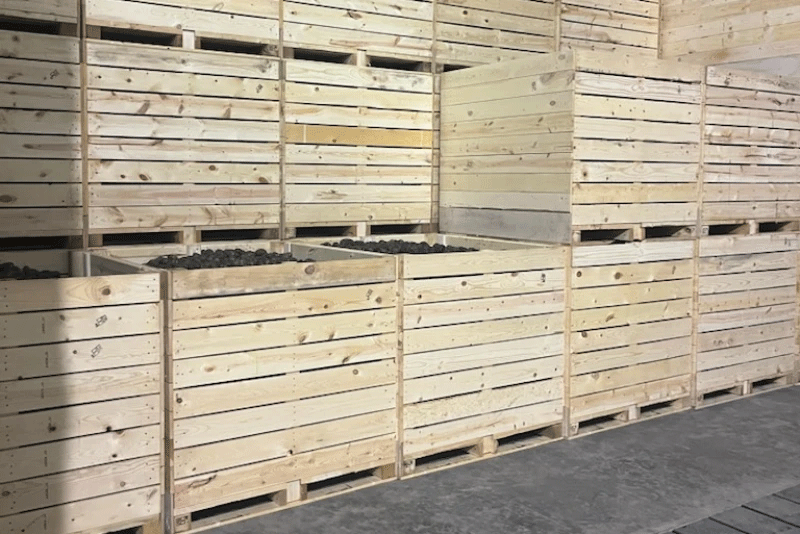
The potato industry faces a constant battle against post-harvest losses, with pressure bruising being a primary culprit in degrading quality and eroding profits. In a bold move to address this, a company is trialing a significant shift in storage methodology: replacing traditional loose, bulk storage with a system of large, 4,000-pound crates. The initiative, as explained by company owner Dave Moquist, specifically targets the reduction of “shrink,” with a keen focus on mitigating pressure bruising. The pilot will concentrate on yellow potatoes, which are notoriously more susceptible to such damage, though red varieties may also be included for a comparative analysis against traditional bulk storage.
The science behind pressure bruising underscores the potential of this approach. When potatoes are stored in deep bulk piles, the weight of the upper layers exerts significant pressure on the tubers at the bottom, leading to internal cell damage that manifests as blackish-blue discoloration. According to research from the University of Idaho, pressure bruising can render a significant percentage of a stored crop unmarketable for fresh or processing use, directly impacting farmgate revenue. The crate system aims to alleviate this by containing potatoes in smaller, managed units, thereby distributing weight more evenly and reducing the crushing force on individual tubers. This method aligns with findings from other agricultural sectors; for instance, the apple industry has long used bin-based storage to minimize compression damage on delicate fruit. The success of this trial could provide a scalable, mechanical solution to a problem that costs the global potato industry billions annually.
The move to crate-based storage represents a pragmatic and innovative response to one of the most persistent challenges in potato post-harvest management. While the initial investment in infrastructure may be higher than traditional bulk systems, the potential returns in reduced shrink, higher quality outturn, and access to premium markets could be substantial. This trial will be closely watched, as its findings could validate a new best practice for storing high-value, sensitive potato varieties and inspire a broader re-evaluation of bulk storage across the industry.
