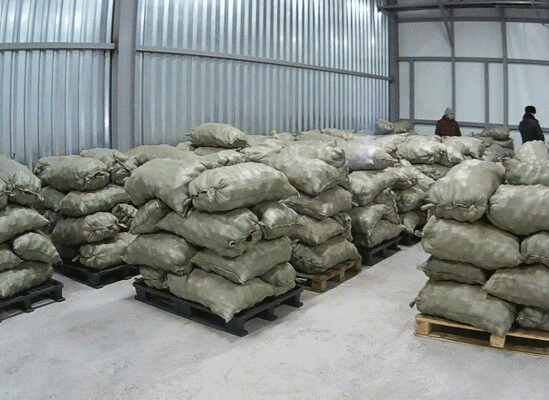
In the first half of 2025, the Republic of Buryatia imported 4,700 tons of potatoes, with 5,000 tons sourced from Mongolia alone, according to Rosselkhoznadzor (Russian Federal Service for Veterinary and Phytosanitary Surveillance). This surge in imports highlights the region’s increasing dependence on foreign agricultural products to meet local demand.
June 2025 saw 185 tons of potatoes arrive in nine shipments, demonstrating steady trade flows. Beyond potatoes, Buryatia imported 20 tons of Mongolian cedar nuts and 20 tons of fresh Chinese carrots, reflecting a broader trend toward diversified food imports.
Ensuring Safety Through Rigorous Inspections
To prevent the introduction of pests, all shipments undergo strict phytosanitary checks at the Kyakhta customs-logistics terminal. Samples are tested at the Baikal branch of the All-Russian Plant Quarantine Center (VNIIKR), with no quarantine pests detected so far in 2025.
This level of oversight aligns with global food safety trends, where countries increasingly prioritize biosecurity. For instance, the FAO reports that global food trade regulations have tightened by 12% since 2020, with a stronger focus on pest control.
The Bigger Picture: Food Security and Trade Partnerships
Buryatia’s agricultural imports supplement local production, ensuring stable food supplies. However, reliance on imports raises questions about long-term self-sufficiency. Neighboring regions like Altai and Irkutsk have increased potato production by 8% in 2024, suggesting that domestic supply chains could be strengthened.
Buryatia’s growing agricultural trade with Mongolia and China enhances food security but underscores the need for balanced import-export strategies. Strengthening local farming while maintaining strict phytosanitary standards will be key to sustainable growth.
