For many years, the cause of pink eye was thought to be a bacterium. However, recent scientific reports suggest that pink eye is a physiological disorder.Disease development. Pink eye occurs sporadically.Disease incidence has been correlated with warm…
Pathogen. The scab bacterium is a common soil inhabitant that survives for long periods of time, even in the absence of potatoes. The strains of the bacterium thatcause common scab produce a toxin called thaxtomin that enables…
Pathogen. Clostridium bacteria are present in most soils.Disease development. The bacteria probably infects tubers at harvest. The disease is favoured by the presence of a film of water on the tuber surface, which decreases the oxygen concentration…
Alfalfa mosaic virus is transmitted by aphids. Aphids acquire the virus from infected alfalfa or clover plants or from infected volunteer potato plants.
When the New York Times’ food and wine writer waxes poetic about your potato—“Inside the Huckleberry Gold’s purple jacket is a fine-textured potato with rich flavor”—you know you may have a winner on your hands… or at least on the…
Pathogen. The soft rot bacterium is common in all agricultural soils and in surface water. Disease development. The bacterium invades tubers mainly through wounds and enlarged lenticels. Excessively wet soils favour soft rot development in the field.…
PARTNERSHIP WILL BRING DISEASE-FREE, PESTICIDE-FREE, NON-GMO POTATOES TO THE SOUTH AFRICAN MARKET WAGENINGEN (The Netherlands) & PIETERMARITZBURG (South Africa) — November 1, 2022 — South African seed potato producer RegenZ and European hybrid potato seed innovator Solynta…
Pathogen. The aerial stem rot bacterium is soil- borne. Contaminated surface water is an important source of infection. Disease development. Incidence of this disease is high in wet seasons. Stems, petioles and leaves become infected through natural…
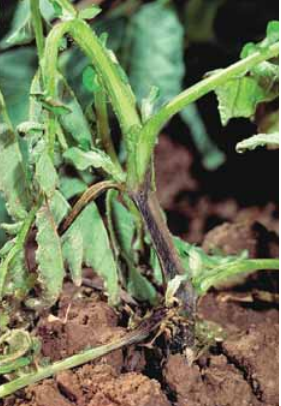
Pathogen. The blackleg bacterium is primarily seed- borne. Contaminated handling equipment such as seed cutters and picker planters contribute to the spread of the bacterium to healthy seed tubers. Wind-blown rain may be a source of inoculum.…
Pathogen. The fungus persists either in the soil or on infected seed tubers. Disease development. Infection takes place through wounds or bruises at harvest or when grading. The rot develops in storage. Disease incidence is higher when…
Pathogen. The powdery scab fungus may survive many years in the soil as resting spores. It attacks roots, stolons, young shoots and tubers. The fungus is spread by planting infected seed tubers, by moving infested soil or…
Pathogen. The leak fungus is widely distributed in soils. It also attacks the underground parts of many other crops. Disease development. The fungus cannot penetrate tubers directly, but enters through bruises and wounds, which usually occur at…