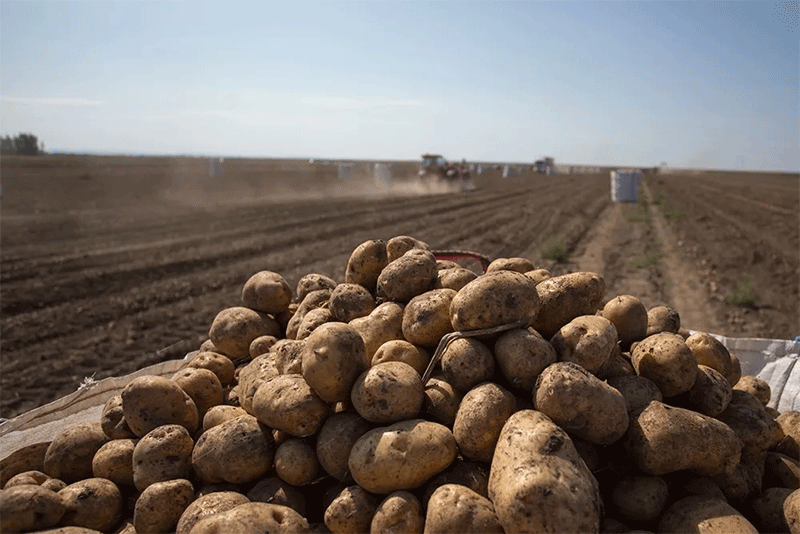
In Nakatsugawa, Japan, the summer vegetable harvest season brought together families, farmers, and members of the local workers’ welfare organization, Joy Seven, for a hands-on farming experience. Around 1,700 participants harvested potatoes (Kitakari variety) and onions over ten days (June 14–23) at a farm managed by Shimono Agricultural Cooperative (Nakatsugawa City). Such events highlight the growing interest in agritourism and community-supported agriculture (CSA)—a trend gaining momentum worldwide.
Agritourism: A Growing Global Trend
Agritourism is no longer just a niche activity—it’s a $7 billion industry globally (USDA, 2023), with Japan seeing a 15% annual increase in farm-visit participation (MAFF, 2023). These events:
- Educate consumers on food origins, reducing food waste (FAO reports a 30% decrease in household waste among participants).
- Support small farms by creating additional revenue streams—40% of small-scale farmers in Japan report improved profitability through agritourism (Japan Agri-Tourism Association, 2023).
Scientific Benefits: Soil Health and Crop Diversity
The Nakatsugawa event featured Kitakari potatoes, a variety known for disease resistance and high yield. Modern agronomy emphasizes crop rotation (e.g., potatoes followed by onions) to:
- Reduce soil depletion (20% higher nutrient retention, Journal of Sustainable Agriculture).
- Lower pesticide use (15% reduction in fungicides for rotated fields, Nature Agriculture).
Community harvest events like Nakatsugawa’s demonstrate how local engagement, sustainable practices, and agritourism strengthen agriculture. For farmers and scientists, these initiatives offer economic resilience, education, and ecological benefits—proving that collaboration is key to the future of farming.
