

Graphene-Modified EPS Modular Stores Give Small Farmers Affordable Potato Storage
Key takeaways
- 28 square metres is the footprint of one storage module
- 18 tonnes of potatoes fit inside a single full-size module
- 8% was the potato loss rate shown in the Gansu field trial
- 5 months: duration of the Gansu storage demonstration
Why it matters
- For farmers
- Smallholders without capital for permanent storage can weigh a 28 sq m, 18-tonne module against the 8% five-month loss rate shown in the Gansu demonstration.
- For suppliers
- Storage-equipment suppliers serving smallholders have a new modular EPS format to track once a manufacturer or distributor is named.
60-second summary
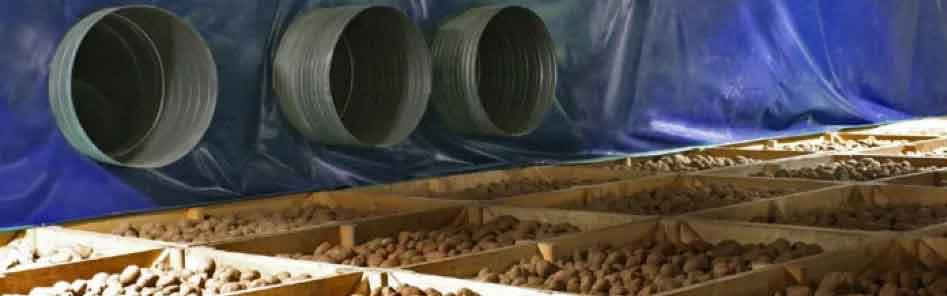
Chinese researchers have developed modular, prefabricated storage units made from graphene-modified expanded polystyrene (EPS), aimed at small farmers who lack the capital to build permanent storage facilities. A single 28-square-metre module can hold up to 18 tonnes of potatoes and can reportedly be assembled in just a few days. The design relies on natural cold rather than mechanical refrigeration, avoiding the energy costs and complexity associated with refrigerated warehouses. Demonstrations carried out in Gansu Province showed losses below 8% after five months of storage, a result the article calls strong for a low-cost, rapidly deployable structure. The graphene modification is intended to enhance the insulating and mechanical properties of conventional EPS, improving temperature stability and durability. The article names no developing institute, manufacturer or price, and gives no comparison against loss rates in conventional storage.
Chinese researchers have developed modular, prefabricated storage units made from graphene-modified expanded polystyrene (EPS) for small farmers who lack the capital to build permanent storage facilities. A single module covering 28 square metres can hold up to 18 tonnes of potatoes and can be assembled in just a few days, making it a practical option for operations with limited budgets, land, or construction capacity. The design relies on natural cold to maintain favourable conditions inside the store, avoiding the energy costs and complexity associated with refrigerated warehouses.
Demonstrations carried out in Gansu Province showed losses below 8% after five months of storage—a strong result for a low-cost, rapidly deployable structure. The graphene modification is intended to enhance the insulating and mechanical properties of conventional EPS, improving temperature stability and durability. If the technology is adopted more widely, such modular units could help smallholders reduce post-harvest losses substantially and capture better prices by holding produce instead of selling immediately after harvest.
Global Potato Brief
Top five stories, prices, disease alerts and events. Weekday mornings, no advertising.
What next
The article gives no name for the research team or institute, no manufacturer, and no timeline for making the modules commercially available.
Linked in this material
- Country
- China
- Sections
- Equipment for storageNewsStorages