Global: Potato Tolerates Salt Up to 3.8–5.1 dS/m in Texel Trials, Not 1.7 as FAO Tables Say
Field trials at Salt Farm Texel in the Netherlands found that Desiree and Diamant kept 90% of yield at soil salinity well above the 1.7 dS/m threshold in the FAO reference table.
Salinity is spreading on farmland through sea-level rise, saline groundwater and irrigation with brackish water. Standard tables say potato is a salt-sensitive crop. Field work at Salt Farm Texel in the Netherlands suggests that some varieties tolerate much more salt than those tables assume.
The reference point is the FAO table used in irrigation planning worldwide. FAO Irrigation and Drainage Paper 61 lists potato with a threshold of 1.7 dS/m soil salinity (ECe) and a yield loss of 12% for every 1 dS/m above it. It rates potato as moderately sensitive. These values go back to work by Bernstein and colleagues published in 1951.
Salt Farm Texel, an open-air research station on the Dutch island of Texel, tested this in the field. A 2016 presentation hosted by Wageningen University & Research says 220 potato varieties were screened for salt tolerance in 2015, on 56 plots of 160 m² at seven salt levels with eight repetitions. It puts the threshold for tolerant varieties at around 4–6 dS/m.
Weekdays. Unsubscribe in one click.
A later report by de Vos and colleagues (2019), published by Saline Agriculture Worldwide, gives exact figures for two varieties irrigated with water at 0.5 to 20 dS/m. Desiree kept 90% of its yield up to 3.8 dS/m, 75% up to 6.0 dS/m and 50% up to 9.8 dS/m. Its maximum yield was 38.3 t/ha. Diamant kept 90% up to 5.1 dS/m, 75% up to 7.4 dS/m and 50% up to 11.1 dS/m, with a maximum of 32.3 t/ha. The report rates Desiree as moderately sensitive and Diamant as between moderately tolerant and moderately sensitive, and notes that both did better than the FAO reference data.
The gap is practical, not only academic. Under the FAO values, a crop at 3.8 dS/m would already lose about a quarter of its yield. At Texel, Desiree lost only 10% at that level. The Wageningen-hosted presentation also reports yields of around 30 t/ha at 8 dS/m in trials in Pakistan in 2015–2016, where the work was taken to farmers.
Why it matters
Farmers in coastal and irrigated regions often decide against potatoes because of salt, based on old reference values. The Texel data show that variety choice can move the salt limit by several dS/m. Still, tolerance differs by variety, and salt also affects tuber size and quality, so growers need local variety trials and regular soil tests rather than a single table value.
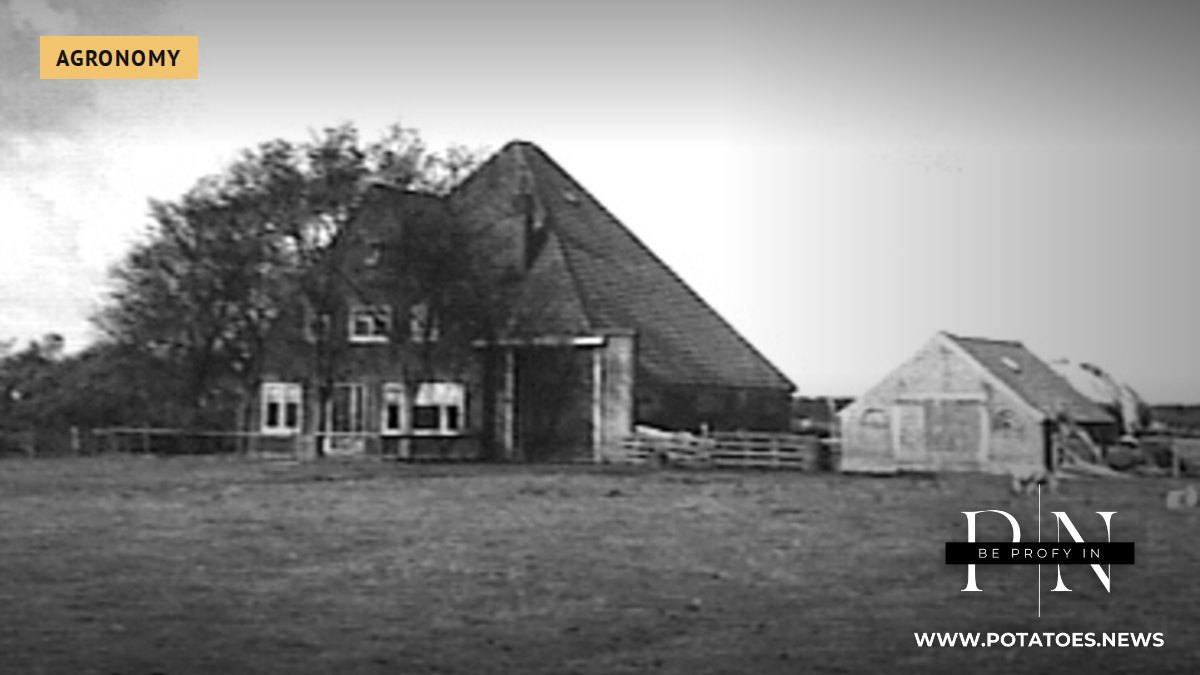
Photo: Farmhouse on the island of Texel, Netherlands (illustrative). Ministerie van Landbouw Visserij en Voedsel (Fotograaf) / Wikimedia Commons, CC BY-SA 4.0