From Surplus to Historic Deficit: Ferdi Buffen Reviews the Market and Forecasts the Harvest at Weuthen Potato Day 2026
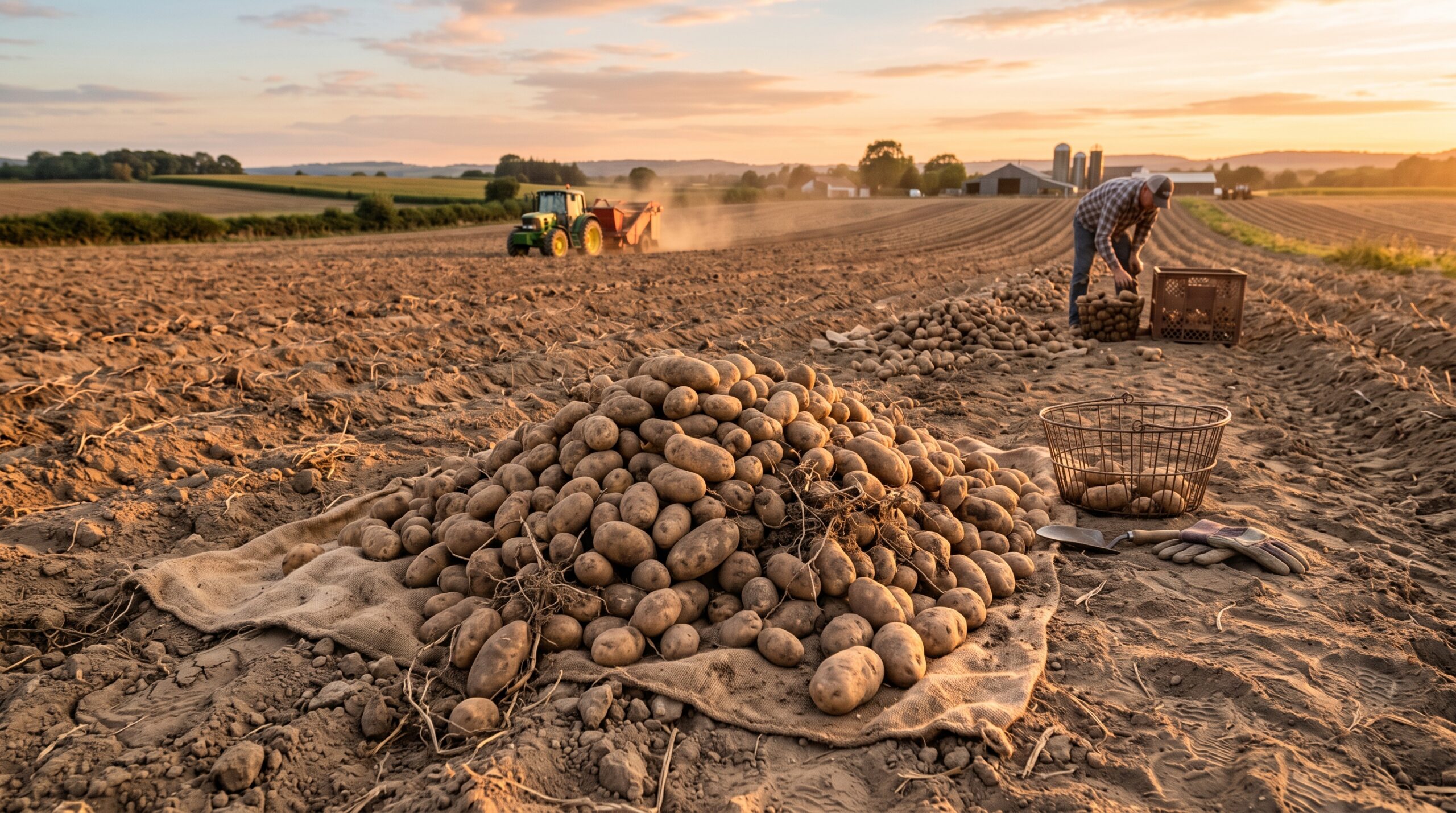
At the 36th traditional Weuthen Potato Day in Schwalmtal, Managing Director Ferdi Buffen presented a detailed analysis of the European potato market. Following last year’s need for a drastic “RESET” due to an oversupply crisis, the European potato industry has entered a new phase of challenges marked by severe drought and historically low yields.
2026 Harvest Forecast: Acreage Reductions and Drought Impact
The conscious reduction of planting areas in the EU-4 block (Germany, France, Belgium, and the Netherlands) amounted to approximately 11%, while early potato plantings for processing dropped by more than 20%. However, the deciding factor of the season was the extreme drought, which particularly affected regions south of the Rotterdam-Osnabrück-Hanover geographical line.
According to Weuthen’s preliminary estimates, the 2026 harvest volumes will be:
Weekdays. Unsubscribe in one click.
- Germany: 9.00 to 10.00 million tons.
- EU-4 (Total): 19.50 to 20.50 million tons.
Test harvests reveal a massive yield gap: yields on non-irrigated fields have fallen to historic lows in some cases, whereas farms with advanced irrigation systems and optimal soil structures are maintaining normal production levels.
Processing and French Fry Market: Global Market Risks
The season began with a delay, as factories processed raw materials from the 2025 harvest well into September, temporarily narrowing the market window for the new harvest. Now, the processing sector is facing a shortage of high-quality raw material.
- Spot Price Dynamics: Spot market prices for processing-grade potatoes from storage are expected to exceed contract levels. The market trajectory could resemble the price curve seen in 2018.
- Adapting Specifications: Processors will need to adjust their raw material specifications to utilize as much of the available crop as possible.
- Global Competition: The deficit and lack of raw material quality in Europe create the serious risk of losing export market shares in Asia to competitors like China, a position that could be difficult to regain.
Table and Seed Sectors: Plant Protection and Quality
The table potato market is showing steady demand and reasonable prices, but phytosanitary conditions and political/regulatory restrictions remain key challenges:
- Plant Protection: The heavy pressure from wireworms, cicadas, and snails, coupled with a lack of appropriate protective tools, threatens the commercial quality of locally produced food.
- Table Potato Storage: Storing quality table potatoes must become profitable again. Price premiums are expected to incentivize producers to sell from storage for the 2026 harvest year.
- Seed Potatoes: No surplus of seed potatoes is expected for the 2026/27 season, and high-quality seeds will be in demand. Seed propagation fields have shown above-average tuber set, resulting in smaller overall sizes and a higher proportion of triplets.
Strategic Conclusions and Outlook for 2027
- Irrigation as a Competitive Advantage: The availability of irrigation infrastructure has become a more critical investment and competitive factor for ensuring quality and yield than simply building storage space.
- Next-Generation Breeding: Sustainable farming requires modern varieties that are resistant to drought and late blight, with low-input varieties remaining a primary goal for breeders.
- Contract Discipline: Structured contract farming proved to be a reliable business model and safety net for farms ensuring income during extreme market volatility.
- Early Segment Prospects: Demand for early potatoes will return in 2027, allowing specialized producers in early-harvest regions to benefit again and regain their planning certainty.