

• About
  • Advertise
  • Privacy & Policy
  • Contact
Friday, September 4, 2026
POTATOES NEWS
  • Login
  • NEWS
    • Company
    • Company history
    • Events and exhibitions
    • Unions and associations
    • Regions
      • Africa
      • America
      • Asia
      • Australia and Oceania
      • Europe
  • DISEASES & PESTS
    • potato diseases
    • crop protection
  • AGRONOMY
    • Agronomy
    • AGRONOMIC ARCHIVE
    • Meteo
    • rotation potato crops
    • Seeds
      • New potato variety
    • Soil
    • Climate
    • IRRIGATION
      • Irrigation equipment
      • Irrigation technology
  • NUTRITION
    • Fertilizers and pesticides
  • MACHINERY
    • Equipment in the field
    • Drone
    • FUTURE
    • Smart
      • StartUp
      • Harvesting
  • STORAGE & PROCESSING
    • Keeping the harvest
    • Equipment for packing
    • Packing
    • Equipment for storage
    • Storages
    • Processing
      • PROCESSING COMPANY
      • Products of processing of potatoes
      • The technology of processing potatoes
  • IPT & VIDEO
    • Exclusive Interview
    • IPT
    • POTATO 2.0
No Result
View All Result
  • NEWS
    • Company
    • Company history
    • Events and exhibitions
    • Unions and associations
    • Regions
      • Africa
      • America
      • Asia
      • Australia and Oceania
      • Europe
  • DISEASES & PESTS
    • potato diseases
    • crop protection
  • AGRONOMY
    • Agronomy
    • AGRONOMIC ARCHIVE
    • Meteo
    • rotation potato crops
    • Seeds
      • New potato variety
    • Soil
    • Climate
    • IRRIGATION
      • Irrigation equipment
      • Irrigation technology
  • NUTRITION
    • Fertilizers and pesticides
  • MACHINERY
    • Equipment in the field
    • Drone
    • FUTURE
    • Smart
      • StartUp
      • Harvesting
  • STORAGE & PROCESSING
    • Keeping the harvest
    • Equipment for packing
    • Packing
    • Equipment for storage
    • Storages
    • Processing
      • PROCESSING COMPANY
      • Products of processing of potatoes
      • The technology of processing potatoes
  • IPT & VIDEO
    • Exclusive Interview
    • IPT
    • POTATO 2.0
No Result
View All Result
POTATOES NEWS

Decoding the Speckled Leaf: Three Overlooked Threats to Your Potato Yield
by T.G. Lynn
18.09.2025
in News, Potato diseases
0
654651621654165416

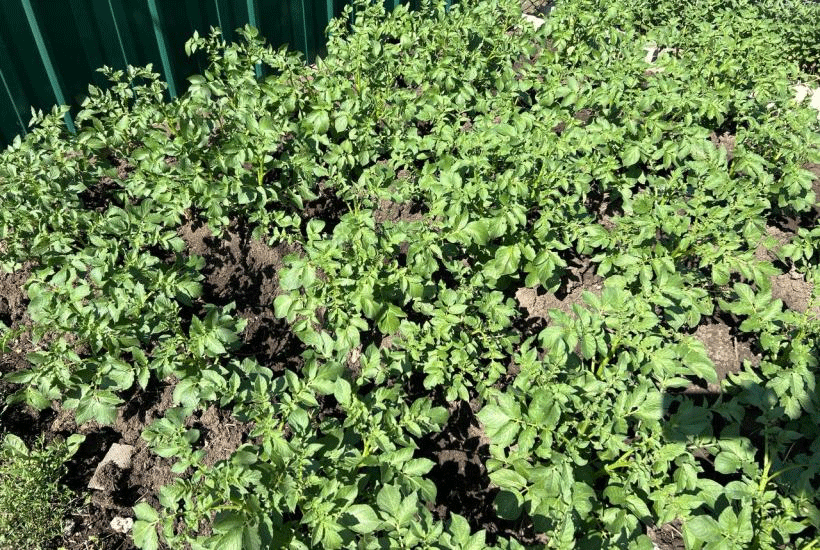
The appearance of dark spots on potato foliage is more than an aesthetic issue—it’s a critical distress signal indicating chemical damage, fungal invasion, or bacterial infection that can devastate yields if not promptly identified and addressed. Understanding the subtle differences between these causes can mean the difference between salvageable production and complete crop failure.

Potato growers often face the concerning appearance of speckled leaves during the growing season, typically responding with blanket treatments that may not address the underlying cause. While end-of-season yellowing is natural, dark spots represent pathological issues requiring specific interventions. The three primary causes include chemical burns from pesticide/fungicide overdose, early phytophthora infestans infection, and bacterial manifestations of common scab—each requiring distinct management strategies that many farmers fail to differentiate until significant damage has occurred.

Chemical Burn: Self-Inflicted Damage
The most immediately addressable cause comes from improper chemical application. When fertilizers or protective agents are applied in excessive concentrations, they create necrotic spots typically appearing as dark brown lesions with irregular patterns across leaf surfaces. Research from the International Plant Nutrition Institute (2023) indicates approximately 20-30% of crop damage in commercial potato operations results from chemical application errors, particularly during tank mixing or when using multiple products with similar active ingredients.

Phytophthora Infestans: The Persistent Threat
The appearance of brown spots with blurred edges accompanied by rapid wilting signals phytophthora, the same pathogen that caused the Irish Potato Famine. Modern strains have developed increased resistance, with the EuroBlight monitoring network reporting in 2024 that 43% of tested phytophthora strains in Europe show reduced sensitivity to mandipropamid, a common fungicide active ingredient. Without targeted fungicide application within 48-72 hours of symptom appearance, the disease can destroy entire fields within weeks.

Common Scab: The Soil-Borne Menace
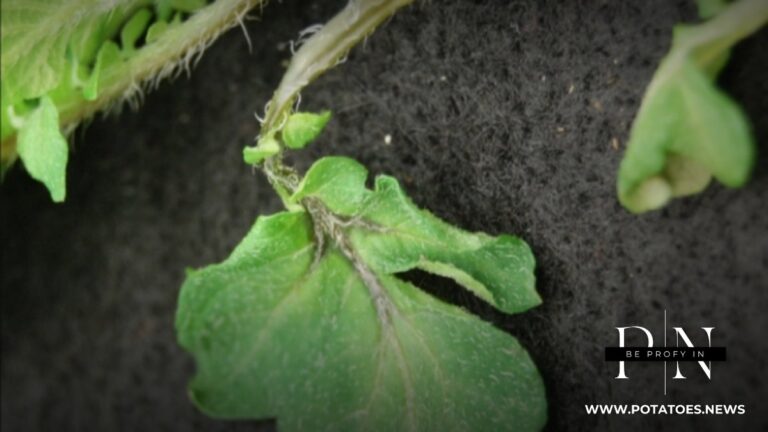
While primarily affecting tubers, common scab (Streptomyces scabies) manifests on leaves as small, dark spots before creating cork-like lesions on potatoes. Unlike phytophthora, scab thrives in alkaline soils (pH above 7.0) and is exacerbated by excessive manure application. A 2023 study in Plant Disease documented that soil pH reduction through sulfur amendment decreased scab incidence by 68% in field trials, highlighting the importance of preventive soil management over chemical treatment.

The speckled leaf serves as an early warning system that demands immediate and accurate diagnosis. Rather than applying generic treatments, successful farmers must become adept at distinguishing between chemical damage, phytophthora, and scab through careful observation of spot patterns and progression. The most effective strategy integrates preventive measures—including soil testing, calibrated application equipment, resistant varieties, and crop rotation—with targeted interventions when symptoms appear. As pathogen resistance increases and consumer preferences shift toward reduced chemical use, the ability to accurately read plant symptoms and implement precise responses becomes increasingly critical for both yield protection and economic sustainability.
Tags: chemical burnCommon ScabCROP PROTECTIONdisease identificationfungicide resistanceintegrated pest managementleaf spot symptomsPhytophthora infestansPotato Diseasesyield loss prevention
Previous Post

Beyond French Fries: Belarus Charts a New Course with Value-Added Potato Processing

Next Post

The Buyer’s Eye: How Consumer Potato Selection Directly Impacts Farm Profitability and Market Signals

T.G. Lynn

Next Post
The Buyer’s Eye: How Consumer Potato Selection Directly Impacts Farm Profitability and Market Signals

The Buyer's Eye: How Consumer Potato Selection Directly Impacts Farm Profitability and Market Signals

Leave a Reply

Your email address will not be published. Required fields are marked *

partner in Kenya

BE PROFY IN POTATOES NEWS

Potatoes.News — the global potato industry since 2010. Partner with us.
Copyright © 2010–2026 POTATOES NEWS

Navigate Site

  • About
  • Advertise
  • Privacy & Policy
  • Contact

Follow Us

Welcome Back!

Login to your account below

Forgotten Password?

Retrieve your password

Please enter your username or email address to reset your password.

Log In
No Result
View All Result
  • NEWS
    • Company
    • Company history
    • Events and exhibitions
    • Unions and associations
    • Regions
      • Africa
      • America
      • Asia
      • Australia and Oceania
      • Europe
  • DISEASES & PESTS
    • potato diseases
    • crop protection
  • AGRONOMY
    • Agronomy
    • AGRONOMIC ARCHIVE
    • Meteo
    • rotation potato crops
    • Seeds
      • New potato variety
    • Soil
    • Climate
    • IRRIGATION
      • Irrigation equipment
      • Irrigation technology
  • NUTRITION
    • Fertilizers and pesticides
  • MACHINERY
    • Equipment in the field
    • Drone
    • FUTURE
    • Smart
      • StartUp
      • Harvesting
  • STORAGE & PROCESSING
    • Keeping the harvest
    • Equipment for packing
    • Packing
    • Equipment for storage
    • Storages
    • Processing
      • PROCESSING COMPANY
      • Products of processing of potatoes
      • The technology of processing potatoes
  • IPT & VIDEO
    • Exclusive Interview
    • IPT
    • POTATO 2.0

Potatoes.News — the global potato industry since 2010. Partner with us.
Copyright © 2010–2026 POTATOES NEWS