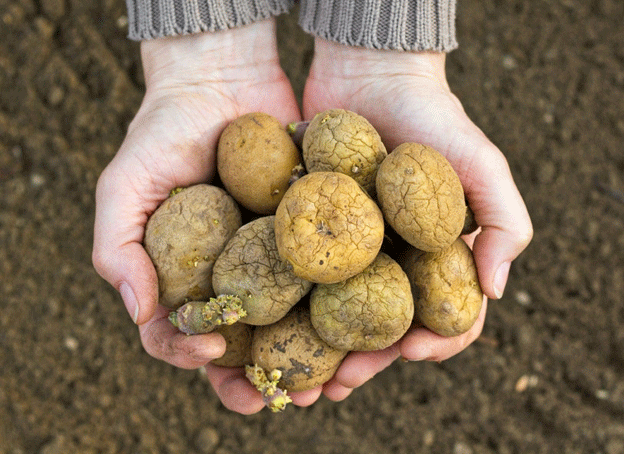
Seed potatoes are the foundation of a successful potato crop. Good handling and preparation practices not only protect seed health but also help maintain physiological age—a major factor influencing yield, stem number, and tuber quality. As emphasized during the NAPSO Webinar #3 (March 2025), the entire process—from storage to planting—must be managed carefully to set the stage for healthy, vigorous plants.
Storing Seed Potatoes: Slowing Physiological Aging
Dr. Kasia Duellman, Extension Seed Potato Specialist at the University of Idaho, highlighted that careful storage management is crucial:
- Cooling Rate: Gradually lower temperatures by 3–4°F per week, or faster (per day) with excellent airflow.
- Target Storage Temperature: 34–39°F to maintain dormancy and minimize premature sprouting.
- Ventilation: Proper airflow prevents condensation and soft rot.
Before shipment, seeds should be warmed slowly to prevent temperature shock and minimize bruising—a leading cause of seed aging and vulnerability to disease.
Best Practices for Shipping Seed Potatoes
Shipping introduces significant risk if not done correctly. Dr. Duellman recommends:
- Pre-warming Seed: Raise pulp temperature above 45°F before removal if cutting soon after arrival.
- Handle with Care: Avoid drops over six inches to prevent mechanical injury.
- Ventilated Transport: Maintain air circulation to prevent moisture buildup and freezing.
- Educated Drivers: Drivers must understand temperature and airflow requirements.
Poor shipping conditions can result in losses of up to 30% in seed viability, according to recent data from the American Journal of Potato Research (2024).
Receiving and Handling Seed
Upon receiving seed:
- Clean Storage Areas: Avoid contamination with diseases or chemical residues like CIPC (Chlorpropham).
- Wound Healing: Essential if seeds are cut. Ideal conditions are:
- Temperature: 50–70°F
- Humidity: 85–95%
- Airflow: Continuous
- Time: 1–3 weeks, depending on disease risks and wound size.
Proper wound healing significantly reduces risks of Fusarium dry rot and soft rot, two major threats in early-season potato crops.
Understanding Physiological Age
Physiological age matters more than the harvest date:
- Young Seed: Higher yield potential, fewer stems.
- Middle-Aged Seed: Faster emergence, more uniform set.
- Old Seed: Weak emergence, smaller tubers, lower vigor.
Environmental stresses (temperature swings, bruising) speed up physiological aging, making careful handling vital. Using physiologically appropriate seed improves establishment and final yields.
Cutting and Treating Seed for Planting
Cutting large tubers into seed pieces can extend supply, but:
- Pre-warm to 45–50°F before cutting.
- Ideal Size: 1.5–3 oz per piece.
- Sharp Blades: Sanitize regularly to prevent spreading disease.
- Wound Healing: Post-cutting, allow seed pieces to suberize before planting.
Fungicide Seed Treatments:
- Target diseases like Fusarium, Rhizoctonia, and silver scurf.
- Rotate fungicide modes of action to prevent resistance.
- Liquid applications offer better coverage than dusts.
While chemical treatments are “cheap insurance,” Dr. Duellman cautions they are not a cure-all, especially under cold, wet soil conditions.
Final Planting Considerations
For successful planting:
- Match seed temperature to soil temperature.
- Avoid overnight exposure of seeds in planters.
- Choose correct spacing and depth based on seed vigor and variety.
- Use fungicide-treated seeds when disease pressure is high.
Emergence delays caused by cold or wet conditions can devastate crop establishment, so ensuring good planting conditions is essential.
From careful storage and gentle shipping to smart cutting and appropriate treatments, every step in seed potato handling matters. As Dr. Kasia Duellman stressed, small mistakes at any stage can have major impacts on yield and profitability. By adopting these best practices, growers can protect their investment, improve field performance, and contribute to a more resilient, sustainable potato industry.
As environmental challenges and disease threats continue to evolve, staying informed and proactive in seed management is more critical than ever.
For those interested, the full webinar recording and presentation materials are available through the NAPSO website.