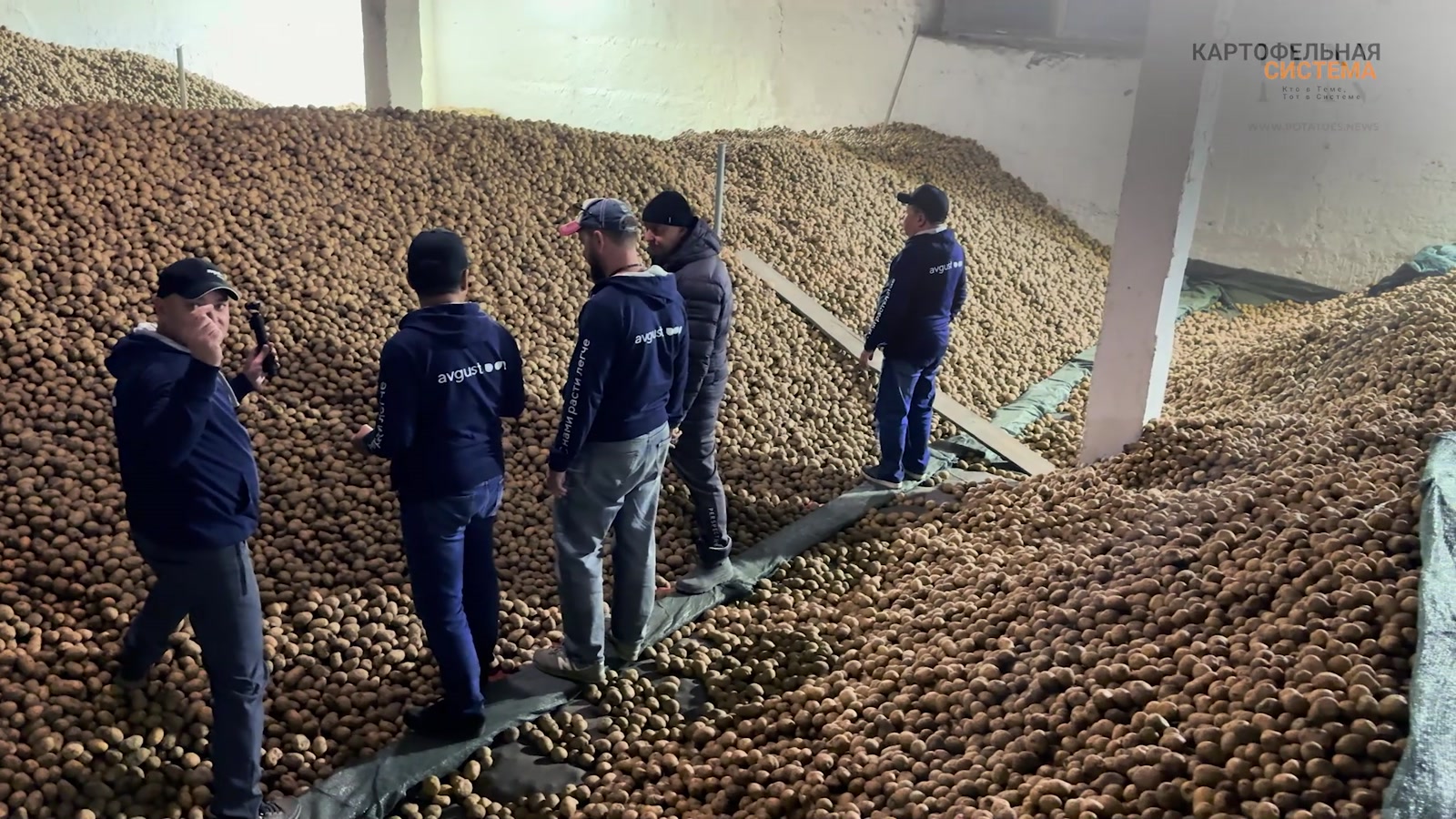
In Kazakhstan’s Karaganda Region, the International Potato Tour visited the Zhanat production cooperative. In the archive report, grower Maxim Bukaev explains why the area planted in the season filmed fell short of the cooperative’s usual target. He also describes how the team handles the harvest when there is limited space in the store.
Watch the Zhanat visit
- 03:27 The usual target and the area planted
- 03:58 Irrigation and where the water comes from
- 12:23 How the farm allocates storage space
- 15:29 How Bukaev’s family began farming
- 19:53 Preparing the loam before planting
Watch the short overview on RUTUBE
The difference between the target and the area planted
Bukaev says the cooperative generally aims to plant around 500 hectares of potatoes. In the season covered by the report, it planted 425 hectares. He says the sprinkler equipment arrived late and some of the land was still being prepared. He says he stopped planting when he saw that time was running short for ground preparation.
Weekdays. Unsubscribe in one click.
Irrigation and the work before planting
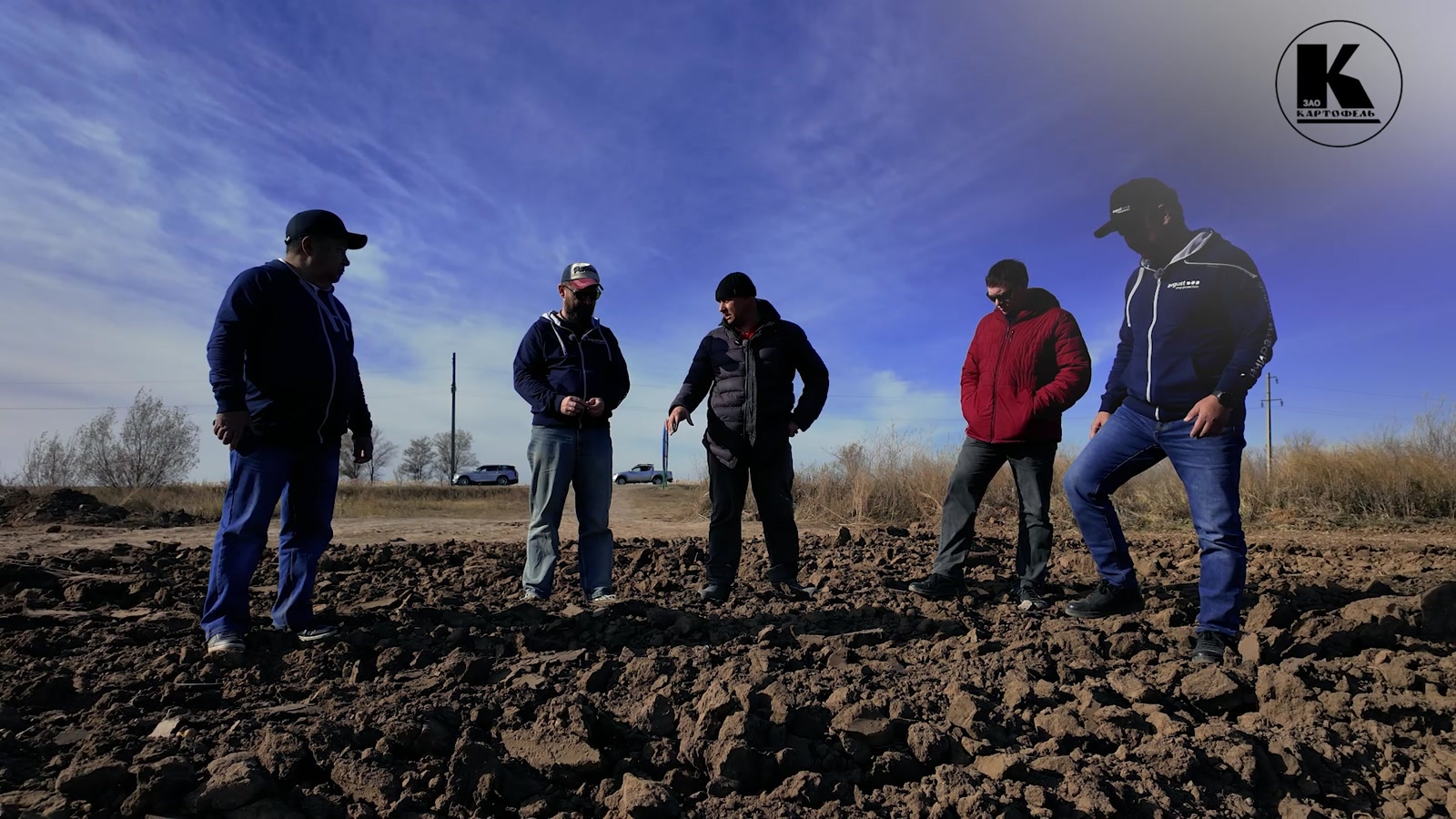
Bukaev says all the cooperative’s potato ground is irrigated. He describes water reaching the land through a concrete canal from a reservoir. Later, in the field, he shows the clods left in the loam and explains why the team harrows before planting. He says the work helps retain moisture and breaks up clods before they harden.
What Zhanat keeps when space runs short
Bukaev says the cooperative could not store the whole crop at the time of the visit. He describes keeping seed potatoes and part of the smaller grade in the store and selling the larger potatoes. He also notes that buyers and growers may have different uses for the same size grade. That is one reason the team has to sort the crop carefully before it goes to storage or sale.