Russian agricultural holding Belaya Dacha has bought the farming company Kulikovo in the Dmitrov district of the Moscow region, according to the company. The deal was reported by Agroinvestor on 25 September and by the regional news site Regions.ru on 27 September. The price was not disclosed.
Kulikovo was registered in 1998. Its land bank is 3,700 hectares, and the farm specialises in vegetables. According to the company, the new owner will continue to grow potatoes, beets, carrots and cabbage on this land. It will also add head lettuce in the open field. Part of the area will be used to test new crops.
The company says the target is 60,000 tonnes of vegetables and 3,100 tonnes of head lettuce per year. It did not give a separate figure for potatoes.
Weekdays. Unsubscribe in one click.
Vadim Matusevich, the chief executive of Belaya Dacha, said the farm has very good logistics because it is close to the sales market. This saves money on transport inside the business. He said the company plans to settle the farm’s obligations to creditors, prepare the land and restore the vegetable stores. He also said the company intends to create new jobs.
Kulikovo is still profitable. Last year its revenue fell by 23% to 543 million roubles, according to company data cited by both outlets. Regions.ru reports that net profit fell by 33% to 57 million roubles. Agroinvestor, citing the Rusprofile database, values the net assets of the company at 1.1 billion roubles. Regions.ru adds that the farm upgraded irrigation on 2,200 hectares between 2017 and 2024 and earlier received 32 million roubles in state support.
Belaya Dacha has four processing plants in four Russian regions, according to a company page on Agroinvestor. The group is also adding new salad greenhouses in the Krasnodar region.
Why it matters
The deal shows how large vegetable groups in Russia add land close to their packing plants and to big cities. Farms near Moscow save on transport, but many old farms need new money for stores and irrigation. The plan to restore the vegetable stores at Kulikovo is important, because storage decides how long potatoes can be sold after harvest.
For local potato growers, a strong buyer with its own land may mean less need to buy raw material from outside. For equipment and storage suppliers, the renovation of old stores may bring new orders. The company has not yet said how much it will invest.
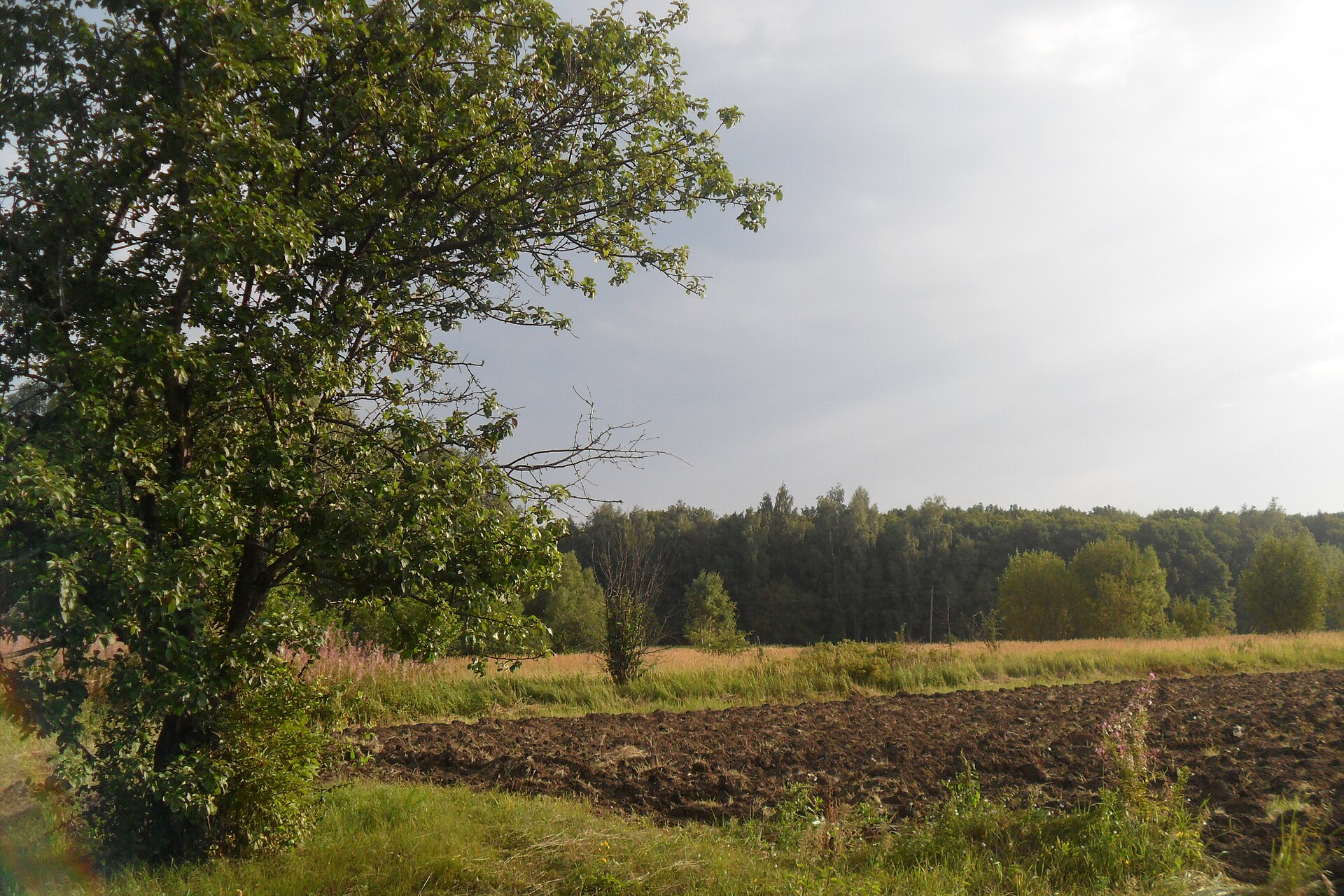
Photo: A potato field near the village of Kharino, Tula region, Russia (not the Kulikovo farm) (illustrative). Валдес Иванов / Wikimedia Commons, CC BY-SA 3.0