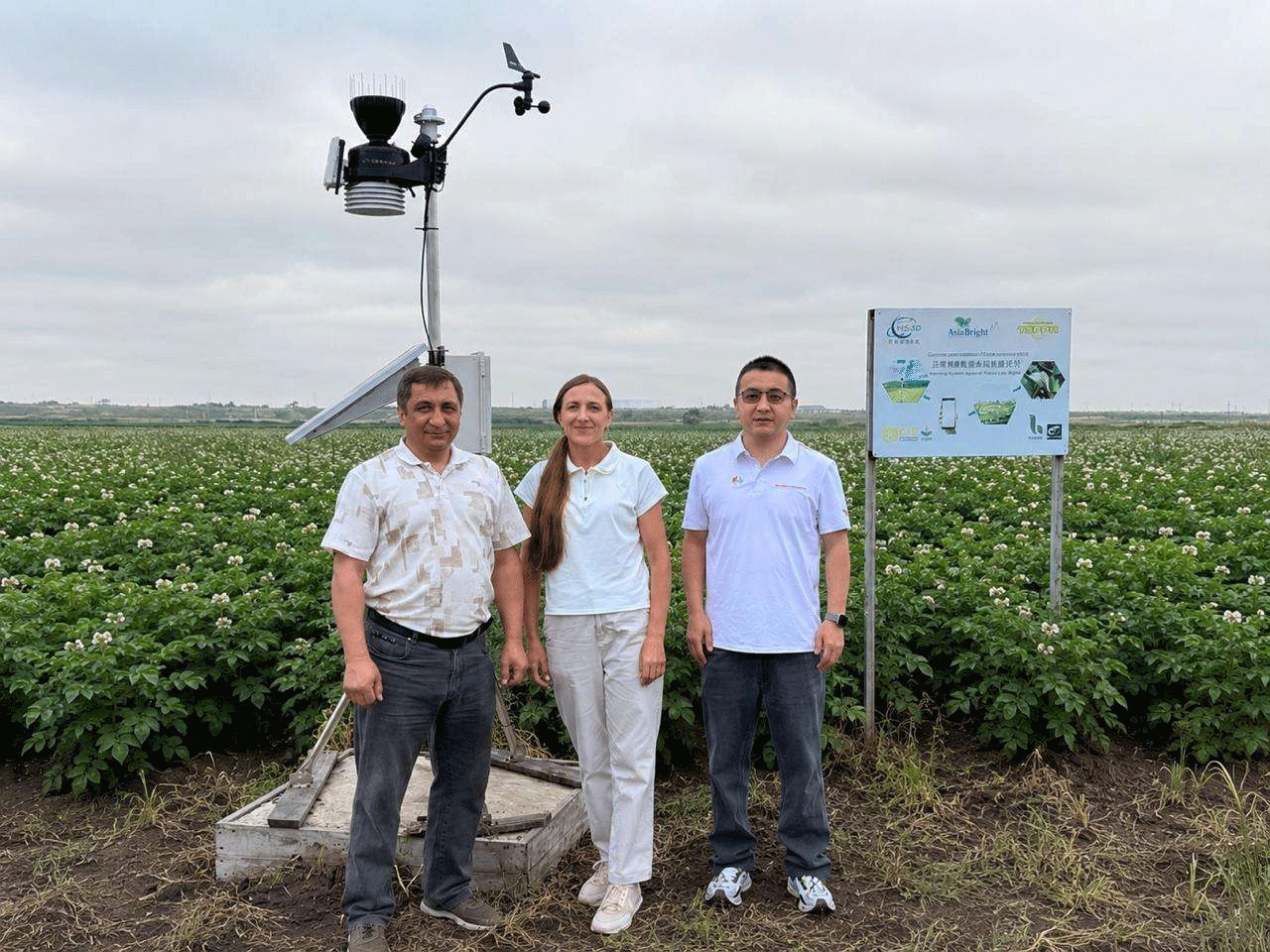
In a remarkable display of cross-border agricultural cooperation, scientists from Kazakhstan, Russia, and China have come together on a single experimental potato field near Kostanay to advance a shared project focused on colored-flesh potato varieties and integrated disease management. The centerpiece of their work is an automatic weather station, installed just over a year ago, that monitors temperature, humidity, rainfall, wind, soil conditions, and solar radiation around the clock. By analyzing this real-time data, the system can predict the onset of late blight – the most dreaded potato disease – and send early warnings to agronomists. This allows farmers to apply protective treatments only when absolutely necessary, reducing both chemical costs and environmental impact. A Chinese engineer recently visited the site to calibrate the equipment and train local specialists in data interpretation, underscoring the project’s truly international nature.
Despite a wildly erratic summer – with over 100 mm of rain in early June (three times the norm) followed by an 18-day dry spell and scorching heat – the crops remain in excellent condition, thanks in large part to timely interventions guided by the monitoring system. The project also highlights a broader shift toward digital agriculture: when wet fields prevent tractors from spraying, drones step in to do the job, regardless of weather or timing. The partnership was further cemented at a recent potato growers’ congress in Yekaterinburg, marking the 70th anniversary of the Ural Research Institute of Agriculture, where leading breeders and seed producers from all three nations reaffirmed the importance of their joint work. With smart tools, shared expertise, and cross-border collaboration, this project is not just about growing potatoes – it is about growing a more resilient and sustainable future for the entire region.