
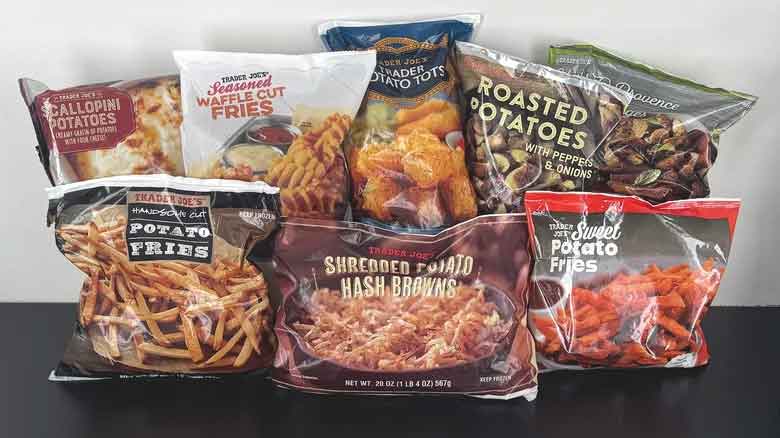
An identifiable eight-product tasting provides a sounder starting point for discussing Trader Joe’s frozen potato assortment than an anonymous technical ranking. Read alongside the retailer’s own product information, it shows how format, preparation and the question being asked can change the meaning of a favourable review.
Updated November 2026. This source-linked edition replaces the earlier article while retaining its archive address and original publication date.
The source is a first-hand tasting
In a 15 February 2026 Daily Meal article, Jenn Carnevale described trying eight frozen potato products, preparing most in both an oven and an air fryer. She considered flavour and texture in her personal ranking. Sweet Potato Fries placed first and Seasoned Waffle Cut Fries second; the account also describes differences between preparation methods.
Weekdays. Unsubscribe in one click.
This is a named reviewer’s experience with selected products. It is not a representative consumer panel, a blind sensory study or a measurement of sales. Its value to a processor is in the product questions it raises, rather than a claim that the ranking predicts the whole market.
The product description supplies another kind of evidence
Trader Joe’s official Sweet Potato Fries page describes peeled sweet-potato pieces that are steam-blanched and par-fried before freezing. That information identifies the product’s preparation history. It does not independently prove the retailer’s taste claims or the reasons for a reviewer’s preference.
The distinction matters when comparing products from a freezer assortment. Cut shape, raw material and preparation state should be recorded before results are interpreted. A finished retail product cannot be described adequately by the word fries alone, and sweet potatoes represent a different crop from ordinary potatoes.
Product names and questions must match
The Daily Meal review’s lower-ranked shredded hash-brown product should not be conflated with every item sold under a similar name. Trader Joe’s Hashbrowns page describes its fully cooked product and Idaho-grown raw material, while the retailer’s 2025 customer-choice discussion identifies Hashbrowns as a category favourite in its own voting exercise.
These sources concern different product-identification and evaluation contexts. One reviewer’s comparison and a retailer’s customer poll do not constitute the same test. Neither should be used as a substitute for confirming the exact SKU and the preparation method relevant to a processor’s development work.
Useful questions for product development
A practical comparison could define the intended serving occasion and then assess candidate products under the same preparation and holding conditions. The record would identify the product, cooking method, portion and criteria used to judge it. That would make later comparisons easier to interpret than a general claim that one format is best.
For suppliers, the relevant conversation is which characteristics the customer wants to reproduce consistently. For growers and processors, a tasting alone does not reveal a raw-material contract specification or establish demand growth for a particular crop. Those require their own evidence.
The recovered review is therefore useful as a product-assortment story. It offers identifiable observations and a transparent personal method, while the retailer supplies product descriptions. The commercial lesson is to turn those observations into defined tests, rather than attach unsupported market valuations or investment conclusions to a favourite snack.
What this means for growers and the supply chain
- Identify the reviewer, method and exact product before interpreting a ranking.
- Keep retail descriptions separate from independent performance evidence.
- Use observations to design product tests, not to infer market size or sales.