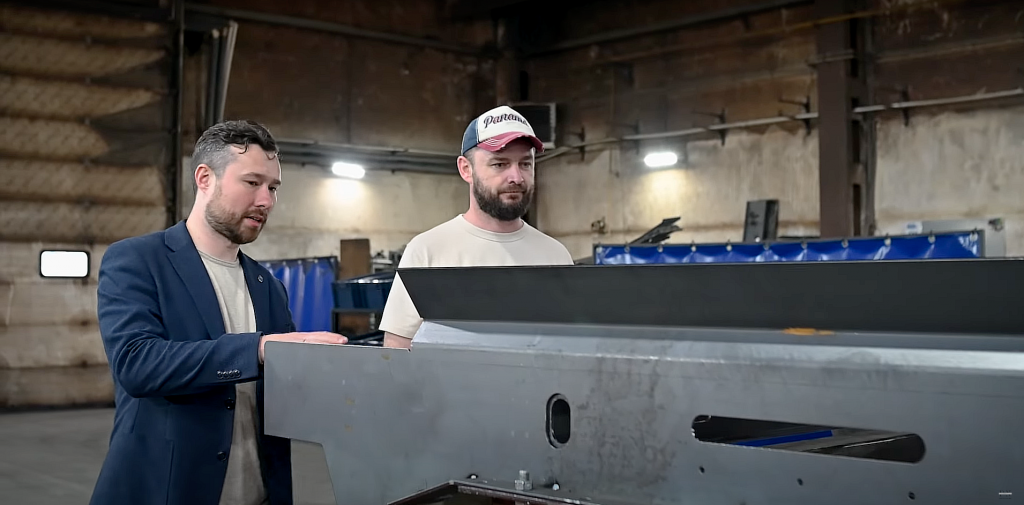
In 2025, the International Potato Tour visited Wilder’s factory during its tour of Russia. Director Vladimir Mamayev showed how the company turned a customer request into a semi-trailer designed to haul potatoes, grain and silage. The factory visit followed the project from early load tests to the way workers fit the body and running gear together.
Watch the factory report
- 01:09 How the customer brief became a prototype
- 05:19 Grain and silage tests
- 08:38 Tandem bending and deburring
- 10:29 The two-axle converter dolly
- 14:41 Body assembly and the alignment fixtures
- 17:47 The unloading belt and hydraulic interlocks
What the first trials covered
Mamayev said the project began after a request from Miratorg. Wilder built its first unit about six months after taking on the project. In an early grain run, the team fully loaded the trailer and drove it to see whether grain escaped. The team also loaded silage above the sides during the visit, and Mamayev said it discharged as a continuous mass. At the time of filming, a potato trial was planned for harvest.
Mamayev later cited about four minutes to unload grain using the floor conveyor in the run he discussed.
Weekdays. Unsubscribe in one click.
How the body and running gear were aligned
On the shop floor, Mamayev showed how the team assembled the two sides separately before joining them with cross-members. The team used one set of fixtures for the body and another for the running gear to line up the bolt holes when those assemblies met. The longitudinal rails were tack-welded before final welding to control distortion.
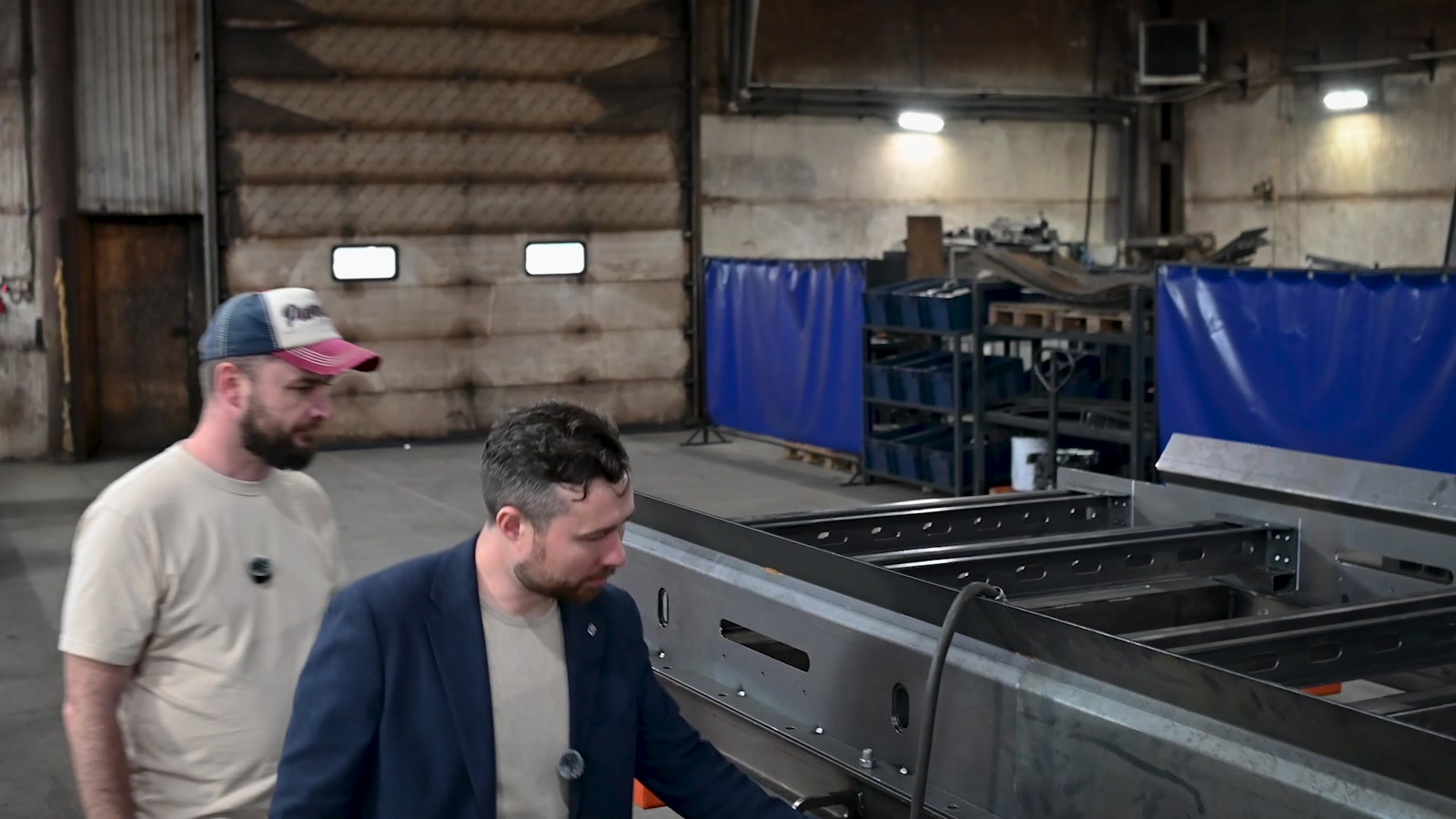
The tour also showed a tandem bending setup. The shop could bend a single part up to six metres long or work with three-metre sections. It used tumbling drums to remove scale and blunt sharp edges on small parts before welding and painting. Mamayev explained that sharp edges were more likely to lose their paint coating.
A converter dolly and a floor conveyor
Mamayev described a two-axle converter dolly with leaf springs, intended to limit the loads transmitted to the trailer as it crosses uneven ground. He also explained that the hydraulic interlock prevents the conveyor or rear gate from operating until the corresponding lock sequence has been completed.
Wilder’s current catalogue lists a 40-cubic-metre potato semi-trailer with floor-conveyor unloading and S700MC steel for the chassis and body frame.