US Potato Crop Projected at 17.9 Million Tonnes, Smallest Since 2010 — Warm Winter Could Compound Storage Risks
The United States is heading into the 2026/27 marketing season with its tightest potato supply base in more than a decade and a half. A market analysis projects national production at roughly 17.9 million tonnes for 2026 — about 830,000 tonnes, or 4.4%, below the 2025 crop, 5.5% under the five-year average, and the smallest harvest since 2010.
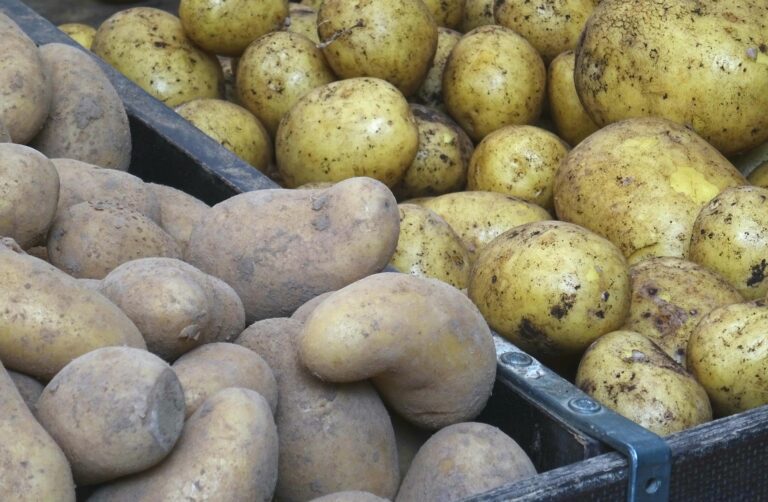
As ever, Idaho and Washington will decide how the season plays out: the two states account for more than half of US potato production. High summer temperatures cut yields across the Columbia River basin, while other regions report smaller tubers and a more limited availability of large potatoes. That size profile matters as much as the tonnage — the fresh market pays its premium on count-size cartons, and processors need long, uniform tubers for strip cutting.
The tightening is already visible in pricing. Quotes for Russet Norkotah are holding above year-ago levels, especially in the larger grades. Packers are competing for limited volumes of good-quality tubers, while the frozen fry industry has begun securing raw material early for the 2027 campaign — a signal that buyers expect the supply squeeze to persist rather than wash out.
Weekdays. Unsubscribe in one click.
Storage is where the analysis adds a genuinely uncomfortable layer. A strong El Niño episode could bring above-normal winter temperatures to several northern production regions. A warmer winter reduces the windows in which outside air can be used to cool storages, increasing reliance on mechanical refrigeration, forced ventilation and electricity consumption — a direct cost line on every month a lot stays in the shed.
The quality risks compound the cost risk. The analysis lists weight loss, pressure damage, condensation, disease development, premature sprouting and reduced shelf life among the principal threats to stored tubers. In a shorter-crop year those losses carry amplified weight: every percentage point of storage shrink lands on a market that has less to spare, with disproportionate effects on availability and pricing in the second half of the marketing season — precisely when the industry normally coasts on stored volume.
The recommended response is granular rather than dramatic. Specialists advise adjusting management to the condition of each individual lot, local weather and the data coming from storage systems. Monitoring pulp temperature, humidity, ventilation, carbon dioxide, disease incidence, weight loss and dormancy progression will be fundamental to carrying quality through to spring 2027. In practical terms: the 2026 crop will not forgive a set-and-forget storage strategy.
For buyers outside North America, the numbers matter too. A US crop at a 15-year low, with processors already locking in 2027 raw material, tightens the global trade balance for frozen product at the same moment Europe is forecasting one of its smallest harvests of the decade. The 2026/27 season is shaping up as one where raw-material security — not price alone — separates the comfortable from the exposed.