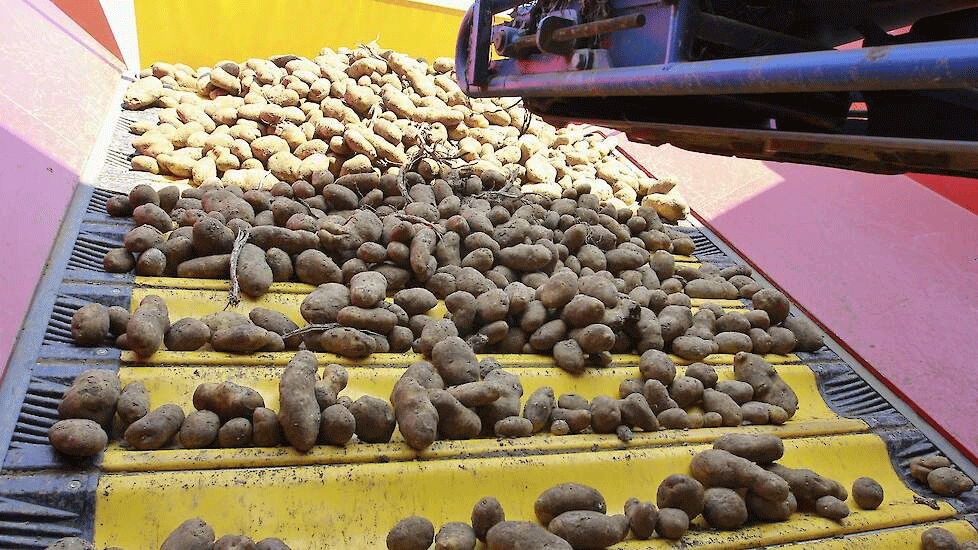
A recent move by a major potato processor to impose stricter financial penalties for quality defects has ignited a firestorm among Dutch farmers and could set a precedent for global agricultural supply chains. The conflict highlights the perennial tension between producers and processors over quality standards, risk-sharing, and fair trading practices, bringing EU legislation designed to protect farmers into sharp focus.
The Dutch agricultural association LTO has sounded the alarm after potato growers received a letter from processing giant Farm Frites. The company announced the immediate implementation of a “significantly heavier” discount system for quality defects, citing a higher-than-expected incidence of damage and quality issues. Farmers were given just five days to agree to the new terms, under the threat of having their shipments rejected. LTO Chairman Hendrik Jan ten Cate condemned the approach, stating that while the need to process lower-quality potatoes is understood, “the tone and the deadline of the letter are unacceptable.” In response, LTO has sought legal counsel and filed a formal complaint with the Netherlands Authority for Consumers and Markets (ACM), alleging a potential breach of the Law on Unfair Trading Practices in Agriculture.
This dispute is a microcosm of a larger, global issue of power asymmetry in agricultural supply chains. The Farm Frites case directly tests the EU’s Unfair Trading Practices (UTP) Directive, which was fully transposed into national laws like the Dutch Wet OHP in 2021 to protect weaker suppliers from buyer misconduct. A 2023 report by the European Commission on the UTP Directive’s application found that such “sudden and retroactive changes to supply agreements” are among the most common complaints. Furthermore, data from a recent agribusiness survey indicates that over 60% of fresh produce suppliers feel they have little to no negotiating power against large processors and retailers, often absorbing a disproportionate share of production and market risks.
The standoff between Dutch potato growers and Farm Frites is more than a local contract dispute; it is a critical test case for the enforcement of fair trading laws in agriculture. The outcome will be closely watched by farmers and processors across Europe and beyond. For agronomists and farm owners, it underscores the non-negotiable need to understand their legal rights within supply contracts. For the industry as a whole, it highlights that achieving a sustainable and resilient food system requires not only advancements in crop quality and yield but also a fundamental rebalancing of power and risk to ensure equity and fairness from field to factory.
