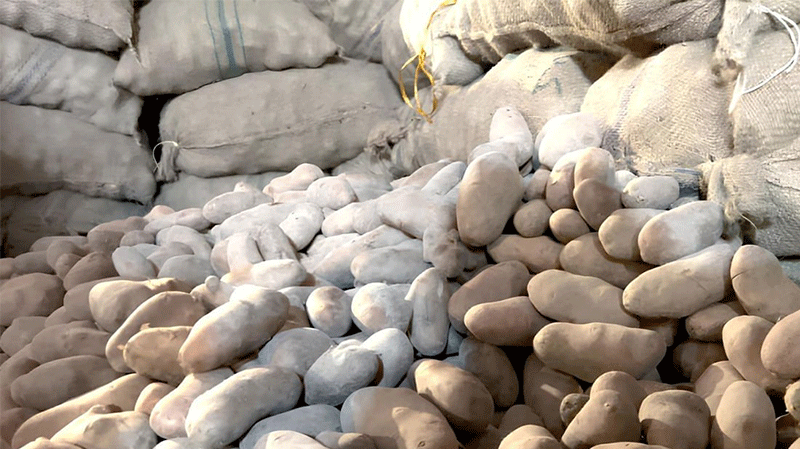
The numbers from Bangladesh paint a stark picture of a market in severe distress. According to data from the Trading Corporation of Bangladesh (TCB), retail potato prices have plummeted to BDT 18–25 (USD 0.16–0.23) per kg, a near 61% collapse from last year’s price of BDT 50–60 (USD 0.45–0.54). At the wholesale level, the situation is even more dire, with traders reporting prices as low as BDT 11–12 (USD 0.10–0.11) per kg.
This price crash is a direct result of a fundamental supply-demand imbalance. The Bangladesh Bureau of Statistics (BBS) estimates a historic production of 1.15 crore (11.5 million) tonnes in the last season. Against a national demand of approximately 90 lakh (9 million) tonnes—for direct consumption, seed, and processing—this created a massive surplus. Despite exporting 62,000 tonnes in FY 2024-25, a staggering 12 lakh (1.2 million) tonnes remain in cold storage with only a few months to be sold, creating a pressure cooker scenario that is exploding onto the market.
The Human and Economic Cost
For the farming community, these macro-level statistics translate into personal financial ruin. Farmer Ashraf Sarker from Munshiganj exemplifies the crisis, reporting a production cost of BDT 31 (USD 0.28) per kg against a selling price of just BDT 9 (USD 0.08). This means he is losing over BDT 22 (USD 0.20) on every kilogram he sells. His story is not unique; with an investment of BDT 500,000 (USD 4,500) and sales of only BDT 80,000 (USD 720) to date, his livelihood is threatened.
The crisis was exacerbated by a critical failure in government intervention. In August, authorities announced a support package: a procurement target of 50,000 tonnes and a minimum cold storage gate price of BDT 22 (USD 0.20) per kg. Neither materialized. As Mostofa Azad Chowdhury Babu, President of the Bangladesh Cold Storage Association, stated, the actual price at cold storage levels is now BDT 10–11 (USD 0.09–0.10), less than half the government’s fixed price. This inaction shattered farmer confidence and distorted market behavior, as many held onto their produce expecting the promised support that never came.
A Global Perspective and Systemic Failures
The Bangladesh case is a potent example of a global agricultural challenge. According to the Food and Agriculture Organization (FAO), post-harvest losses and price volatility remain significant threats to food security and farmer welfare worldwide, particularly in developing economies. The core issue lies not just in overproduction, but in a weak market infrastructure and a lack of effective risk management tools.
The government’s attempt to control prices by fiat, without the logistical and financial follow-through, was destined to fail. As the Cold Storage Association president noted, “You can’t control prices just by fixing them. When supply is high, prices naturally fall.” This highlights a universal truth: effective agricultural policy requires more than announcements; it demands robust execution, data-driven market analysis, and the development of diversified value chains, including robust processing and export channels, to absorb surplus production.
The potato price collapse in Bangladesh is more than a local news story; it is a cautionary tale for the global agricultural sector. It underscores the devastating consequences of disconnects between production planning, market realities, and policy execution. For farmers, agronomists, and policymakers everywhere, the lessons are clear: achieving high yields is only half the battle. Building resilient agricultural systems requires integrated strategies that include advanced market intelligence, functional price support mechanisms, and strong, diversified value chains to protect the very producers who feed the nation. Without these, record harvests will continue to be a prelude to financial disaster for farmers.
