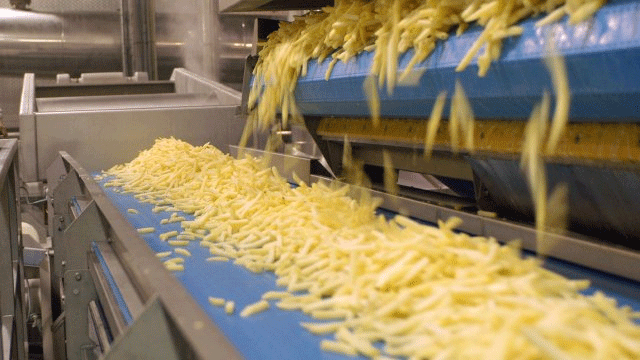
Belgium is a powerhouse in potato processing, exporting €4.85 billion worth of frozen fries and potato products in 2024, thanks to the fertile “potato belt” spanning Northern France, Belgium, the Netherlands, and Germany. However, the sector is at a crossroads, with consolidation, climate risks, sustainability regulations, and emerging competitors threatening its dominance.
1. Land Scarcity and Import Dependence
Belgian farmers planted a record 111,000 hectares of potatoes in 2025—an 11-fold increase since 1995. Yet, the “potato belt” is reaching its limits. To meet global demand, processors increasingly source from France, Germany, and the Netherlands, making Belgium the world’s third-largest potato importer.
However, long-distance imports pose risks. In 2024, a major processor resorted to Egyptian potatoes due to shortages, only to face quality issues. As Cedric Porter of World Potato Markets notes, “Transporting potatoes is inefficient—a 40-ton truck carries just 1 hectare’s yield, compared to 5 hectares of wheat.”
2. Climate Change Slashing Yields
Extreme weather—droughts, heatwaves, and excessive rain—has destabilized yields. In 2022, Belgian potato production fell by 7% (40 tons/ha vs. 47 tons/ha in 2017). The 2023 wet season cut Westhoek yields by 15%, delaying planting and harvesting.
Only 15% of Belgian potato fields are irrigated, and resilient varieties remain underdeveloped. Poor weather in 2023 also led to a seed potato shortage, forcing farmers to use lower-quality alternatives, sparking disputes with international buyers.
3. Sustainability Rules Driving Up Costs
EU regulations—nature restoration laws, pesticide restrictions, and water directives—are squeezing farmers. Mathieu Vrancken of Belpotato.be warns, “What nitrogen rules are to livestock, pesticide limits are to potatoes.” Few affordable biological alternatives exist, forcing farmers to choose between lower yields or higher costs.
Land availability is also shrinking. Buffer zones and biodiversity rules may reduce arable land further, compounding cost pressures from pricier fertilizers, labor, and machinery post-COVID and Ukraine war.
4. Asian Competitors Rising Fast
Global demand for frozen fries grows at 3% annually, but China (+86% export growth in 2024) and India (+34%) are undercutting prices by 25-30%. While Belgium invests in US, Indian, and Chinese plants (e.g., Agristo, Clarebout), trade tensions loom—US tariffs may hit 30% in August 2025.
Christophe Vermeulen of Belgapom argues innovation is key: “We must compete on quality, not price.” Belgian firms like Lutosa and Agristo lead with coated fries for air fryers, a niche Asian rivals haven’t mastered.
Adapt or Decline
Belgium’s potato sector must innovate, diversify, and lobby for fair trade rules to counter climate, regulatory, and competitive threats. Without strategic shifts, the industry risks following the decline of Europe’s textile sector.
