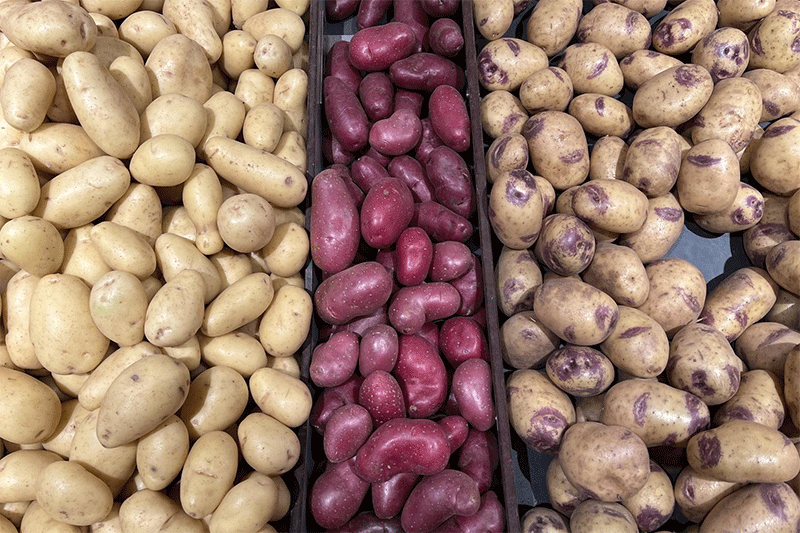
The French organic potato sector is at a pivotal crossroads. According to the National Interprofessional Potato Committee (CNIPT), the 2025/26 campaign signals a potential recovery following two years of significant contraction, which saw planted areas decline by 4.1% in 2022/23 and a stark 17.1% in 2023/24. The current season forecasts a 5% increase in contracted acreage, marking a second consecutive year of growth. This resurgence is primarily driven by a robust 13% expansion in land dedicated to potatoes for industrial processing, which now constitutes approximately 20% of the entire organic potato market. This trend mirrors a broader shift in the European food industry, where demand for organic processed products, from frozen fries to dehydrated flakes, is growing. The domestic supply chain remains overwhelmingly self-sufficient, with French origin accounting for 99% of the market, predominantly sold unwashed (90%) and pre-packaged (75%).
Despite this optimistic production outlook, the market landscape is fraught with challenges. The CNIPT reports a recent downturn in free-market producer prices, attributed to high carry-over stocks, a summer consumption dip, and an overall supply-demand imbalance. While demand was satisfactory in August and September, it weakened noticeably in October. A critical issue lies in consumer adoption: only about one in ten French households purchased organic potatoes in the previous season. This highlights a significant gap between supply potential and consumer behavior. Furthermore, agronomic challenges persist; the CNIPT notes that this year’s harvest has a tendency to sprout faster, necessitating earlier application of sprout suppressants in storage—a key consideration for agronomists and storage managers aiming to maintain quality throughout the campaign.
The French organic potato story for 2025/26 is a tale of two realities. On one hand, producers have successfully stabilized and begun to grow the supply base, particularly for the industrial segment, indicating strong foundational health. On the other hand, the sector’s long-term viability hinges not just on growing potatoes, but on growing the market. The data clearly shows that production capability has outpaced consumer demand. The future of the sector depends on innovative, non-price-based marketing strategies to make organic potatoes more visible and desirable to the 90% of French households not yet buying them. For farmers and the entire supply chain, the lesson is clear: success now requires as much focus on cultivating consumer habits as it does on cultivating the land.
