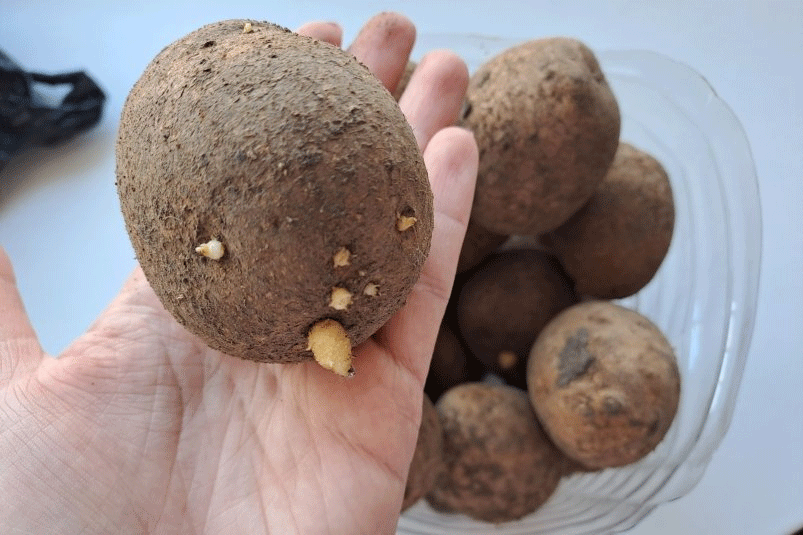
The pursuit of high yield, disease resistance, and storability has long driven potato breeding programs and planting decisions. However, a pointed critique from an experienced gardener on the “uDachny project” channel underscores a significant market tension: agronomic success does not guarantee consumer satisfaction. The article singles out four varieties—’Koroleva Anna’ (Queen Anne), ‘Gala’, ‘Nevsky’, and ‘Arizona’—for their poor culinary performance, primarily citing a waxy, non-disintegrating texture described as “plastic,” an inability to make smooth mash, and unpleasant aftertastes. Notably, these complaints are levied even against varieties like ‘Gala’ and ‘Nevsky’, which are praised for their reliable yields, excellent storability, and visual appeal, highlighting a clear divide between producer and consumer priorities.
The core issue revolves around dry matter content and starch composition. Varieties ideal for boiling and mashing (culinary type B/C) typically have higher dry matter (often above 20%) and a favorable starch profile that allows cells to separate easily when cooked, creating a fluffy texture. The varieties criticized are likely type A or low-end B, with higher sugar and lower starch content, leading to a dense, cohesive, and often watery consistency. This isn’t merely subjective; texture analysis in food science quantifies these properties. While ‘Gala’ is globally popular for its agronomic traits and is widely used in pre-pack salads for its firmness, its very strength becomes a weakness in a boiling bag. Similarly, ‘Nevsky,’ a workhorse variety in Eastern Europe known for its vigor and scab resistance, is often relegated to processing or livestock feed in regions where culinary quality is paramount. The author’s ideal—a potato that is fluffy, tasty, visually appealing, and storable—represents the holy grail of breeding, but achieving all traits simultaneously remains a challenge.
The consumer critique serves as a crucial market signal for the entire potato value chain. While agronomic reliability will always be foundational, ignoring culinary quality risks alienating end-users and commoditizing the crop. For growers, this presents both a challenge and an opportunity. The challenge is to balance field performance with market demand, which may involve segmenting production. The opportunity lies in identifying and promoting varieties that successfully bridge the gap—those with the resilience and yield of a ‘Nevsky’ but the texture and flavor of a premium culinary potato. Future breeding efforts and grower selection must increasingly weight sensory attributes alongside traditional agronomic metrics to meet evolving consumer expectations and capture higher-value market segments.
