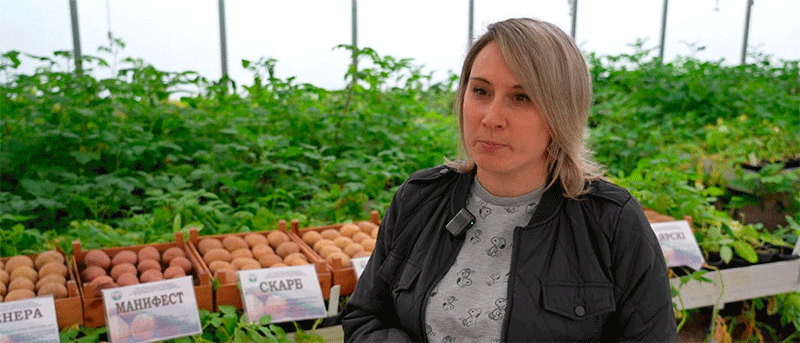
In an era of rapid technological change, the fundamental process of developing a new potato cultivar remains a testament to long-term commitment and scientific rigor. According to Yulia Gunko, Head of the Potato Breeding Department at the Scientific and Practical Center of the National Academy of Sciences (NAS) of Belarus for Potato and Horticulture, the journey from initial cross to a registered variety takes a minimum of 12 to 15 years. This timeline, consistent with global breeding programs, underscores the complexity of combining desirable traits like yield, disease resistance, and quality.
The scale of infrastructure required is significant. Gunko notes that the Belarusian program operates on at least 60 hectares of field space, three greenhouses, and a dedicated scientific center where various laboratories conduct essential evaluations. These include biochemical analysis, suitability for industrial processing, and resistance to a range of pathogens. This multi-layered approach ensures that new varieties are not just agronomically sound but also meet specific market demands. Over its 95-year history, the center has developed more than 140 potato varieties, each with a targeted purpose: early summer production, industrial processing into products like chips and fries, or long-term storage.
This targeted breeding is increasingly critical. A 2023 report from the International Potato Center (CIP) emphasizes that climate change and evolving pest pressures are driving the need for more resilient cultivars. The focus on disease resistance, in particular, aligns with a global push to reduce crop losses and pesticide use. For instance, developing varieties resistant to late blight—which causes billions in annual losses worldwide—is a key research priority for institutions from Scotland to Peru.
The lengthy timeline is due to the biological nature of the potato. Unlike grain crops, potatoes are propagated clonally from tubers. While this ensures consistency, it means that each new genetic combination must be thoroughly tested over multiple generations to ensure stability and performance. Advanced techniques like marker-assisted selection are helping to speed up this process, but field trials across several seasons remain irreplaceable for validating traits like yield stability and storability under real-world conditions.
The work at Belarus’s NAS center highlights a central paradox in modern agriculture: meeting the urgent challenges of food security requires patient, long-term investment in breeding. The 12-15 year development cycle for a new potato variety is not a sign of inefficiency, but a necessary period to ensure genetic excellence and durability. For farmers, agronomists, and industry stakeholders, this underscores the importance of supporting both public and private breeding programs, as the varieties planted today are the result of decisions and investments made well over a decade ago. The future of sustainable potato production depends on the foundational work being done in centers like these right now.
