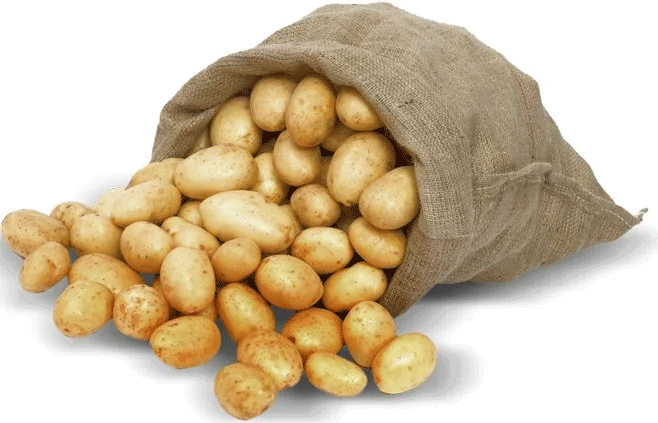
Russian potato farmers are facing a perplexing situation: while current crop conditions appear favorable and harvest projections are strong, agricultural organizations shipped 123,500 tons of potatoes in July 2025—a significant 22.3% decrease compared to the same period last year. This decline occurs despite the Potato Union reporting good planting conditions and anticipating substantially higher final yields than the previous year, with harvest operations continuing through October.
The current challenges are part of a longer-term trend affecting Russian potato production. According to Rosstat data, planted areas decreased by 2.3% to 986,000 hectares in 2025, following an even steeper 6.1% reduction in 2024 that resulted in an 11.9% production decline and subsequent price increases. Despite these area reductions, the Ministry of Agriculture reported over 630,000 tons harvested by August 19, with harvest pace comparable to previous years.
The most dramatic shift has occurred in import patterns. Russia imported 857,000 tons of potatoes during January-July 2025—nearly double the total 440,000 tons imported during all of 2024. This import surge has helped stabilize consumer prices but has simultaneously depressed domestic market conditions for Russian farmers. As Tatiana Gubina, head of the Potato Union, explained, this import growth reduces farmer interest in potato cultivation due to rising production costs, lack of long-term retail contracts, and retail preferences for imported potatoes that often feature larger tuber sizes.
The situation reflects broader challenges in specialty crop production globally. According to FAO data, many countries are experiencing similar tensions between domestic production and imports, particularly as trade liberalization and consumer preferences for consistent quality create competitive pressures on local farmers. The Russian case is particularly notable for the speed of import growth and its impact on farmer decision-making despite apparently favorable growing conditions.
Russia’s potato production challenges illustrate how market dynamics and trade patterns can outweigh agronomic success in determining farmer profitability and engagement. Even with good growing conditions and harvest prospects, structural issues including import competition, retail purchasing practices, and production economics are discouraging farmer investment in potato cultivation. For agricultural professionals and policymakers, this situation highlights the need for coordinated approaches that address both production efficiency and market structure issues. Developing long-term contracts, improving quality consistency, and creating differentiated market opportunities for domestic producers may be necessary to maintain a viable potato sector amid increasing global trade in agricultural products.
