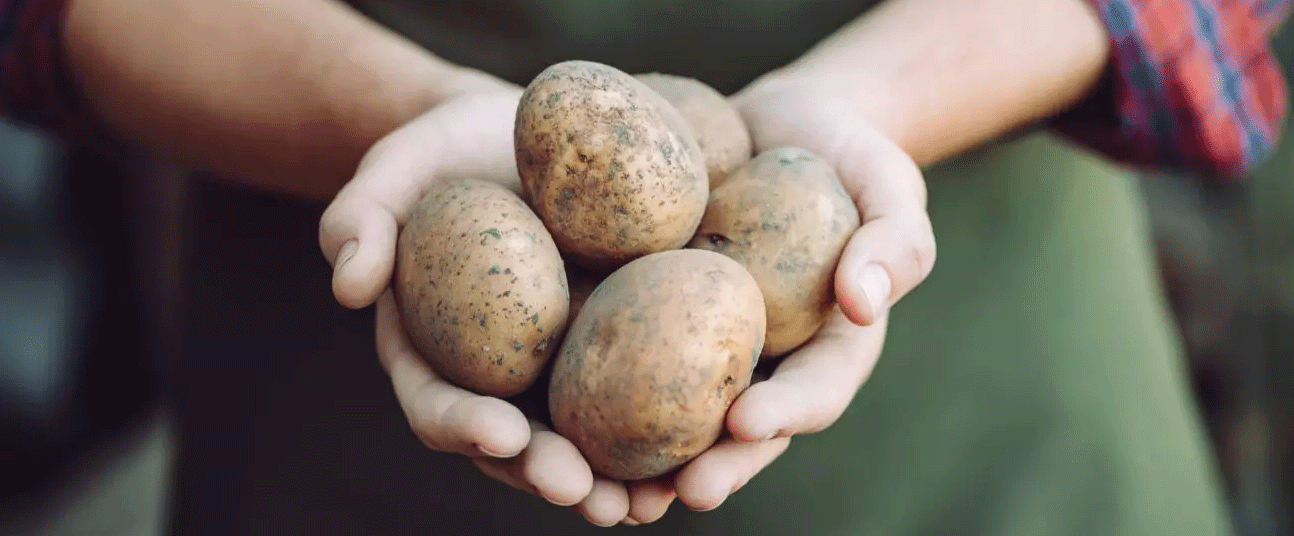
Plants may unknowingly sabotage themselves by sending signals that awaken dormant pests. A team of scientists from Kobe University, led by Professor Masaharu Mizutani, has identified a key molecule—solanoeclepin C (SEC)—secreted by potato roots into the soil. While harmless on its own, SEC transforms into solanoeclepin B (SEB) when exposed to soil microbes. SEB then triggers the hatching of potato cyst nematodes (Globodera rostochiensis and G. pallida), devastating pests that can remain dormant for decades until the right chemical signal appears.
A Three-Way Chemical Warfare: Plant, Microbes, and Parasites
This discovery highlights a sophisticated three-way interaction:
- Potatoes release SEC, especially under nutrient stress (low nitrogen or phosphorus), likely to attract beneficial microbes.
- Soil microbes convert SEC into SEB, which then morphs into the final hatching signal, solanoeclepin A (SEA).
- Nematode eggs detect SEA, breaking dormancy and infecting the plant.
“This is the first time we’ve seen such a complex chemical chain where a plant, microbes, and a parasite interact through sequential molecular signals,” says Professor Mizutani.
Why Would a Plant Invite Its Own Destruction?
The paradox raises an evolutionary question: Why do potatoes produce a molecule that harms them? One theory suggests that SEC originally evolved to recruit helpful soil bacteria, but nematodes hijacked the system. Another possibility is that the metabolic cost of suppressing SEC production outweighs the risk of occasional nematode infestations.
Implications for Sustainable Agriculture
This discovery opens new pest control strategies:
- Pre-Planting Nematode Activation: Synthetic SEC/SEB analogs could be applied before planting, forcing nematodes to hatch in the absence of host plants, starving them out.
- Breeding Resistant Varieties: CRISPR or traditional breeding could develop potato strains that minimize SEC secretion.
- Microbial Manipulation: Soil treatments could block microbial conversion of SEC to SEB.
According to the Food and Agriculture Organization (FAO), nematodes cause $125 billion in global crop losses annually, with potatoes among the most affected. A 2023 study in Nature Agriculture estimated that early nematode hatching techniques could reduce pesticide use by 40% in potato farming.
Turning a Plant’s Weakness Into a Farmer’s Strength
This research transforms our understanding of plant-parasite interactions, revealing how agricultural pests exploit plant biochemistry. By decoding these chemical signals, scientists can develop precision pest control methods that reduce reliance on pesticides while improving crop resilience. The next step? Field trials to test synthetic SEC derivatives and microbial inhibitors—potentially revolutionizing nematode management in potatoes and other vulnerable crops.