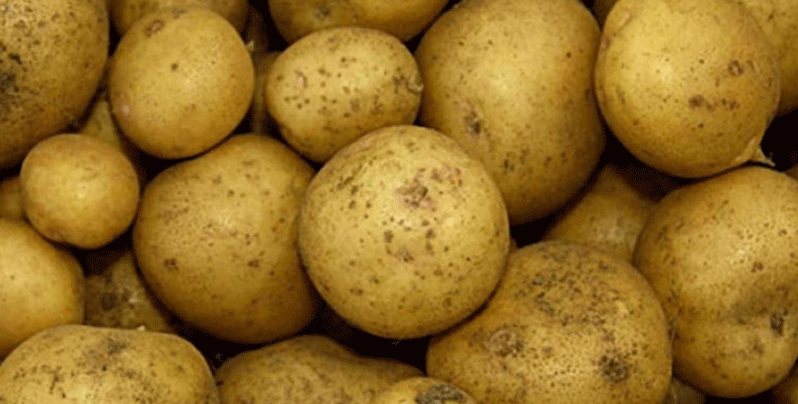
Potatoes are a global staple, ranking as the third most important food crop after rice and wheat. According to the Food and Agriculture Organization (FAO), potatoes are cultivated across 140 countries, covering 16.5 million hectares and producing 359 million tons annually. Yet, despite genetic uniformity, yields vary significantly—even within the same field.
For decades, scientists suspected that microbial communities on seed potatoes played a crucial role in these yield discrepancies. Some microbes enhance growth, while others suppress it. Now, a 2024 study published in Nature Microbiology by researchers from Utrecht University and Delft University of Technology has confirmed this theory—using AI and drone technology to predict potato performance based on microbial DNA.
How AI Decodes Microbial Secrets for Better Yields
The research team analyzed thousands of seed potato samples from 240 test fields in the Netherlands, sequencing the DNA of bacteria and fungi present on each tuber. Simultaneously, drones monitored plant growth, capturing high-resolution images to track health and development.
By feeding this data into an AI model, scientists identified key microbes that influence growth. For example:
- Beneficial bacteria (e.g., Streptomyces) were linked to stronger plant development.
- Harmful fungi correlated with stunted growth.
Yang Song, the study’s lead author, explained: “AI helped us pinpoint which microbes best predict potato growth, allowing us to assess seed quality before planting.”
Beyond Yield: Sustainability and Cost Savings
This breakthrough isn’t just about higher yields—it’s a step toward sustainable farming:
- Reduced chemical use: Farmers can select seeds with optimal microbes, minimizing reliance on synthetic fertilizers and pesticides.
- Climate resilience: Healthier plants better withstand stressors like drought and disease.
- Economic benefits: Lower input costs and fewer crop failures improve profitability.
A 2023 study in Frontiers in Plant Science found that microbial inoculants (like Streptomyces) can reduce fertilizer needs by 25–50%, reinforcing the potential of this approach.
The Future: Tailored Microbial Solutions for Global Farming
The research team plans to expand their AI model, incorporating more crop varieties, soil types, and climates. Future applications could include:
- Microbial seed coatings to boost growth naturally.
- Engineered plants that attract beneficial microbes.
- Precision agriculture tools for real-time field monitoring.
As Roeland Berendsen, the study’s senior author, stated: “We’re at the start of a revolutionary way to improve agriculture through microbiology and AI.”
A Game-Changer for Potato Farmers
This AI-driven microbial analysis offers a proactive, data-backed approach to farming, enabling:
✔ Higher, more consistent yields
✔ Reduced chemical dependency
✔ Greater sustainability
For farmers, the next step is to stay informed about commercial developments and explore microbial inoculant trials. By embracing these innovations, agriculture can become more productive and eco-friendly.
