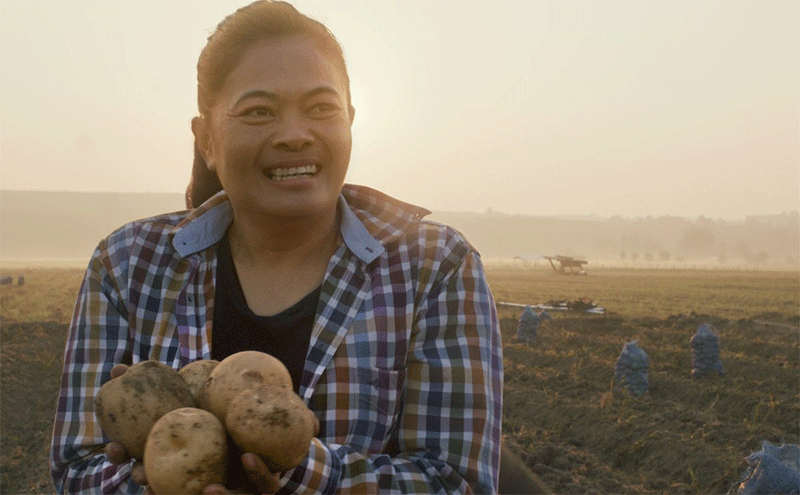
In Thailand’s Isan region, farmer Wisa Lakkhampa’s story is a microcosm of the challenges and opportunities facing modern agriculture. A contract grower for PepsiCo for over a decade, Wisa saw her potato yields and livelihood threatened by a new reality of erratic rains, droughts, and wildfires. Her conclusion, “the old way of farming doesn’t work anymore,” is a sentiment echoing across global potato-producing regions. A 2023 study in the journal Nature Climate Change directly links increased climate volatility to significant yield instability in tuber crops, confirming what farmers like Wisa experience firsthand. In response, a collaborative initiative between PepsiCo and Germany’s GIZ agency, launched in 2022, provided a pathway forward through the develoPPP program, focusing on a “whole-farm” regenerative approach rather than single-crop management.
The results from this initiative are both significant and quantifiable. The program has trained over 3,000 Thai farmers, leading to a dual victory: increased farm income coupled with a reduction in greenhouse gas emissions per ton of potatoes produced. This aligns with a broader corporate push; PepsiCo’s own Pep+ (PepsiCo Positive) initiative aims to spread regenerative practices across 7 million acres by 2030. The success in Thailand demonstrates that these goals are not just aspirational but achievable. For growers, the adoption of practices like improved soil health management, optimized water use, and integrated farm planning doesn’t just mitigate climate risk—it directly enhances profitability by reducing input costs and securing more stable yields, turning sustainability from a cost into a core component of business resilience.
Wisa Lakkhampa’s journey from climate vulnerability to climate-smart leadership illustrates a critical evolution in potato production. The paradigm is shifting from simply growing a crop to managing a complex, interconnected farm ecosystem that must be resilient to shocks. The success of the PepsiCo-GIZ partnership in Thailand provides a powerful, evidence-based case study: regenerative agriculture is a viable economic strategy. For farmers, agronomists, and the industry at large, the message is clear. The future of potato farming depends on embracing these holistic, knowledge-intensive practices that build soil health, optimize resources, and ultimately create a more predictable and profitable enterprise in an unpredictable climate.
