
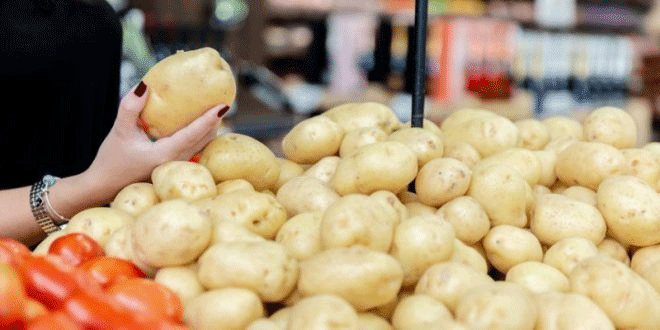
The North American potato market is undergoing its most significant transformation in decades, with yellow-flesh varieties emerging as the driving force of category growth. According to Nielsen data shared by EarthFresh Foods, the yellow potato segment has more than doubled in value from $284 million to $598 million over the past eight years, increasing its market share from 10% to 16% of total potato sales. Perhaps most notably, consumers are demonstrating willingness to pay a 56% premium for yellow varieties compared to traditional russets, signaling a fundamental shift in purchasing behavior driven by flavor preferences and perceived quality.
This consumer-led revolution is reflected in successful product launches like EarthFresh’s Butter Potato program, which achieved remarkable consumer acceptance with over 80% purchase intent in research conducted by IMI International. The program’s success following EarthFresh’s acquisition of Mountain King demonstrates the strategic value of specialized varieties in capturing market premium. Retail data shows that strategic placement of these premium yellow potatoes can drive up to an 18% increase in incremental category sales, creating a win-win scenario for both producers and retailers. This trend aligns with broader consumer research from the Potatoes USA 2023 Consumption Survey, which indicates growing preference for potatoes with richer flavor profiles and versatile cooking applications, particularly among younger, culinary-curious consumers.
The dramatic rise of yellow-flesh potatoes represents more than a temporary market fluctuation—it signals a permanent evolution in consumer preferences that demands strategic adaptation across the potato value chain. For growers, this shift presents both challenge and opportunity: the need to transition production toward more flavorful varieties while capturing substantial price premiums. Agricultural professionals must consider how breeding programs, production practices, and marketing strategies can align with this consumer-driven demand for superior flavor and quality. Those who successfully adapt to this “golden revolution” will position themselves for profitability in an increasingly segmented and value-oriented marketplace.
