
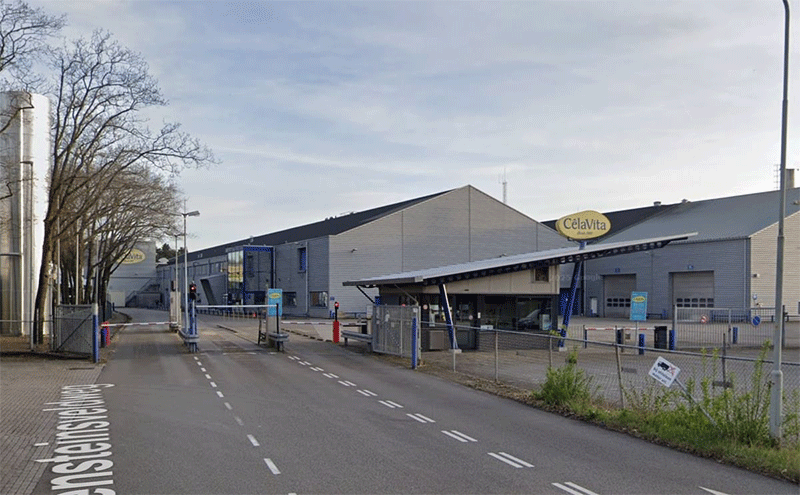
The final dismantling of CêlaVíta’s processing plant in Wezep marks the end of a 58-year legacy and serves as a stark case study for the entire agricultural processing industry. Despite initial interest from approximately ten parties, the court-appointed trustee confirmed that no viable plan emerged to restart the company, leading to the layoff of 171 employees and leaving over 100 contracted growers with thousands of tons of unsold potatoes. The primary barriers cited were a complex corporate structure—where the operating company did not own its factory or land—and the capital-intensive nature of upgrading the specialized facility for washing, peeling, and pasteurizing lines. This separation of assets, which reportedly saw the factory transferred to a real estate subsidiary for a symbolic price prior to bankruptcy, created insurmountable legal and financial complications for potential acquirers.
The collapse of CêlaVíta is symptomatic of broader pressures squeezing the European processed potato sector. While consumer demand for convenient chilled products remains strong, processors are caught in a perfect storm. A 2024 report from the European Potato Processors’ Association (EUPPA) highlighted that energy costs, a major input for pasteurization and refrigeration, have increased by over 45% on average since 2021. Simultaneously, labor shortages and rising raw material prices have eroded margins. This environment disproportionately affects standalone processors like CêlaVíta, which lack the economies of scale, vertical integration, and diversified product portfolios of giants like its former owner, McCain Foods. For the contracted growers, this closure exposes the vulnerability of dedicated supply chains. Without a diversified market for their crop, they are left highly exposed to the failure of a single buyer, a risk that is becoming more acute as the processing segment consolidates.
The CêlaVíta story is more than a single business failure; it is a powerful indicator of a structural shift in agri-processing. It demonstrates that in today’s market, a strong brand and consumer demand are insufficient without a resilient operational and financial structure. For farmers, this underscores the critical importance of diversifying their offtake channels. For the industry, it highlights that future investment in the value-added sector will likely favor highly scalable, vertically integrated models, potentially at the expense of the regional, specialized processors that have long been community cornerstones. The auction of CêlaVíta’s equipment is not just a sale of assets, but a dispersal of the infrastructure of a bygone era.
