
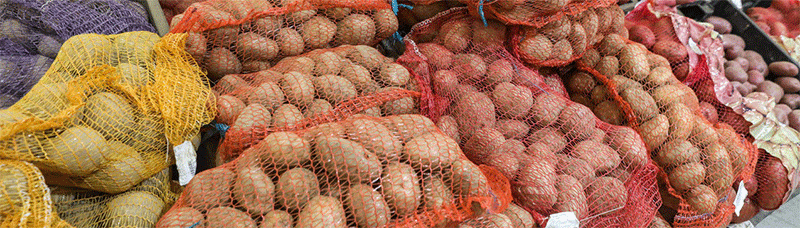
While often viewed as separate domains, consumer purchasing behavior at the retail level sends powerful market signals back through the supply chain, directly influencing farmgate prices, variety selection, and post-harvest handling practices. Understanding the official criteria that guide buyer choices is essential for producers aiming to maximize their market share and profitability.
The Russian Federal Service for Surveillance on Consumer Rights Protection and Human Wellbeing (Rospotrebnadzor) has issued detailed guidance for consumers on selecting high-quality potatoes, creating a de facto specification sheet that farmers and storage operators would be wise to heed. According to the agency, optimal potatoes should be of medium size with uniform shape, free from brown spots, sprouts, and signs of decay. Notably, the guidelines emphasize that medium and smaller tubers contain significantly more nutrients and less starch, making them preferable for health-conscious buyers—a finding that challenges the traditional grower focus on maximizing size and yield alone.
The agency specifies that skin should be thick, tight, and dry, indicating proper maturity and good storage conditions, while limp skin signals nutritional degradation and poor handling. For pre-packaged potatoes, mandatory labeling requirements include variety, country of origin, harvest date, packaging date, storage conditions, and GMO status—information that increasingly drives purchasing decisions among informed consumers. Nutritionally, potatoes are highlighted as valuable sources of protein, potassium, iron, phosphorus, calcium, magnesium, zinc, and numerous B vitamins along with vitamins C, D, E, H, and K.
These consumer preferences align with emerging research on nutritional density. A 2023 study in the Journal of Food Composition and Analysis confirmed that small to medium-sized potatoes can contain up to 30% higher concentrations of certain micronutrients like potassium and vitamin C compared to oversized tubers, supporting the nutritional claims in the guidance. Furthermore, consumer behavior research from the International Food Information Council (2024) indicates that transparency in labeling—especially harvest date and variety—increases consumer trust and willingness to pay premium prices by up to 15% for fresh produce.
For the agricultural community, Rospotrebnadzor’s consumer guidance is far more than basic advice—it’s a clear market signal that should inform decisions from field to storage. The emphasis on medium-sized tubers with high nutritional value suggests that breeders might prioritize different traits, that farmers might adjust harvest timing and grading specifications, and that storage operators might implement protocols that better preserve skin integrity and nutritional content. The detailed labeling requirements further indicate that supply chain transparency and documented post-harvest handling are becoming competitive advantages rather than bureaucratic obligations. By aligning production and storage practices with these evidenced-based consumer preferences, farmers and agricultural businesses can better meet market demand, command higher prices, and build stronger relationships with increasingly discerning consumers.
