
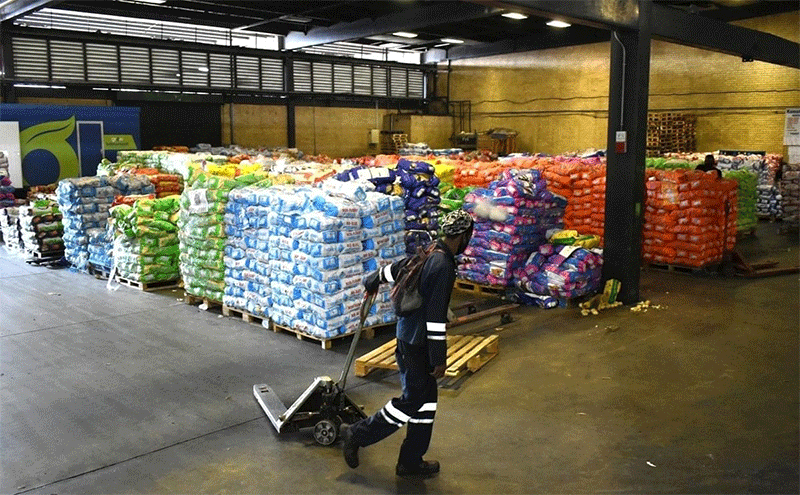
The South African potato market is experiencing a severe price slump, with August 2025 prices down by up to 50% compared to the previous year. While consumers welcome the deflation, this situation poses a dire threat to farmer viability, revealing the fragile equilibrium of agricultural commodity markets. For producers and agronomists worldwide, the South African case is a textbook example of a classic, yet increasingly volatile, boom-bust cycle.
According to David Nel of GROW Fresh market agency, the current crisis stems from a confluence of factors. Following two difficult years marked by load-shedding (power cuts) and winter frosts which constrained supply and drove prices up, producers were incentivized to expand their planted hectares. This expansion, coupled with a mild winter in 2025 that provided “excellent growing conditions,” has resulted in a bumper crop. The projected output includes an additional 12 million 10kg bags from the Limpopo region alone from July to December 2025, creating a massive supply surplus.
The Production-Cost Squeeze and Market Realities
The most critical data point for farmers is the price-to-cost disparity. Current market prices have plummeted to a range of R3.50 to R4.00 per kg. Nel states unequivocally that this represents a loss of approximately R2.00 per kg below the cost of production. With prices expected to stabilize at this “very low” level for the remainder of the year and potentially into early 2026, many farming operations will face significant financial strain.
This scenario is exacerbated by the structure of the South African potato industry. As Nel notes, the market is predominantly for fresh consumption, with limited processing capacity to absorb surplus volumes into frozen, dehydrated, or other value-added products. Furthermore, the inability to store potatoes long-term forces immediate marketing, regardless of price, turning a bumper harvest from a blessing into a financial crisis.
A Global Phenomenon of Volatility
The South African situation is not isolated. Price volatility in staple crops is a global challenge, often amplified by climate variability. A 2024 report from the UN’s Food and Agriculture Organization (FAO) highlighted that climate shocks are increasing the frequency and amplitude of production swings, making market forecasting more difficult. The South African case—where a rebound from climate-related losses (frost) led to a overcorrection—is a clear illustration of this trend. This volatility underscores the limitations of reactive planting decisions based solely on the previous season’s prices.
Strategic Responses and a Plea for Equity
In response, the industry, led by Potatoes South Africa, is focusing on demand-side promotion, emphasizing the current affordability and nutritional value of potatoes to boost per capita consumption. A key part of their strategy is a public call for retail equity, urging supermarkets to ensure the lower farm-gate prices are passed on to consumers. This not only builds future demand but also justifies the current sacrifice being made by producers.
The South African potato price crash is a powerful reminder that high yields do not automatically equate to high profitability. It highlights a systemic vulnerability: production cycles are inherently lagging indicators, and without robust risk management tools—such as diversified product lines, improved storage infrastructure, contract farming, and crop insurance—farmers are exposed to the full force of market gluts. For the global agricultural community, the lesson is clear. Long-term resilience depends on building more agile and diversified systems that can withstand the inevitable swings from scarcity to surplus, ensuring that a season of agronomic success does not become a catalyst for financial disaster.
