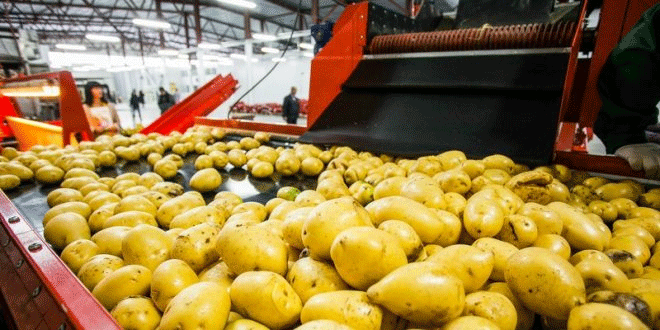
A fundamental realignment is underway in the global potato value chain, centered on the world’s largest producer: China. While mature markets in North America and Western Europe process 60-80% of their harvest, China has historically processed only approximately 15% of its massive output, with over two-thirds consumed fresh. However, a comprehensive review in Foods journal reveals this figure is a baseline for profound change. Driven by state policy designating potatoes as a staple in 2014, rapid urbanization, and booming quick-service restaurant sectors, domestic demand for processed products is accelerating. This shift is not merely a domestic affair; it signifies the activation of a colossal new competitor and partner in the global processed potato trade, with China becoming a net exporter of frozen French fries in 2022, a milestone that underscores its advancing industrial capacity.
The scale of the opportunity is immense. The global potato-processing market, valued at USD 40.97 billion in 2023, is projected to reach USD 60.08 billion by 2031. China’s eight major manufacturers alone produced and sold about 1.27 million tonnes of frozen fries in 2023. Yet, the pathway to capturing more of this value is fraught with systemic constraints. Applying Porter’s Diamond Model, the review identifies critical gaps in specialized processing varieties, storage infrastructure aligned with processor requirements, and advanced automation. Despite strong domestic capabilities in general machinery, China remains dependent on imported European technology for high-efficiency cutting, drying, and frying lines. This dependency, coupled with lower processing yields and consistency compared to Western leaders, creates a significant technology and agronomic innovation gap. Simultaneously, stricter environmental regulations, particularly on wastewater in the starch sector, are forcing consolidation and driving investment in recovery systems, mirroring the resource-efficiency trends long established in European plants.
China’s move up the processing value chain represents both a formidable challenge and a historic opportunity for the global agricultural sector. For established exporters in North America and Europe, China’s growing domestic capacity and export ambitions will create new competition in regional markets. Conversely, for suppliers of specialized seed genetics, precision storage solutions, and high-end processing automation, China represents the world’s most significant growth market. The key takeaway for farmers, agronomists, and engineers is that the future of potato profitability will be increasingly defined by close integration with processing specifications—from field to fork. China’s journey highlights that scaling production volume is insufficient; the premium lies in cultivating the entire ecosystem: dedicated varieties, bulletproof storage, automated efficiency, and sustainable practices. Those who can provide or adopt these integrated solutions will thrive in the new landscape shaped by this awakening giant.
