
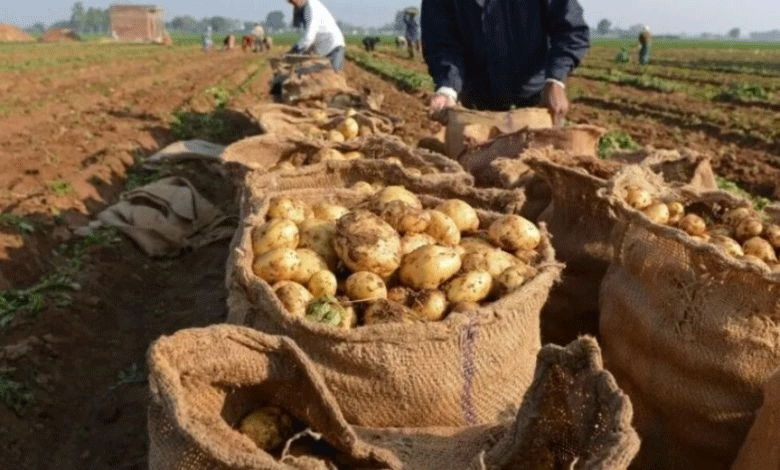
Aïn Defla province is emerging as a critical hub for Algeria’s potato production, with agricultural services targeting 5,500 hectares for off-season potato cultivation in the 2025/2026 campaign. This strategic initiative represents a significant commitment to strengthening national food security through specialized production systems and advanced agricultural planning.
Production Structure and Seed Focus
The cultivation plan demonstrates a sophisticated approach to potato production, with 4,000 hectares (73% of total area) dedicated to seed potato production and 1,400 hectares allocated for consumption potatoes. This emphasis on seed production is particularly significant given that Algeria has historically imported approximately 40% of its seed potato requirements. The province has established a certified seed potato stock of nearly 1.4 million quintals (140,000 metric tons) produced locally, substantially reducing dependency on imported planting material.
Of the consumption potato area, 430 hectares will be cultivated through partnerships between farmers and Agricultural Production Units (UPA), formerly known as pilot farms. These collaborative arrangements help ensure technology transfer and quality standards while providing market security for producers.
Water Resource Management and Irrigation Infrastructure
The province’s irrigation capabilities provide a strong foundation for agricultural success. Aïn Defla boasts 1,474 operational boreholes and 1,790 functional wells dedicated to irrigating potatoes and other strategic crops, including cereals. Recent meetings between agricultural and water resource authorities have focused on precisely estimating irrigable areas and calculating water volume requirements, reflecting a data-driven approach to water management.
This infrastructure is particularly crucial given Algeria’s water challenges. According to FAO data, the country’s agricultural water efficiency has improved by 25% over the past decade through such targeted irrigation investments, though water scarcity remains a significant concern across North Africa.
Storage Capacity and Market Regulation
Aïn Defla has developed impressive potato storage infrastructure, with 28,000 tons of potatoes currently stored across 130 requisitioned cold storage facilities. The Algerian Agricultural Products Regulation Company (SARPA) has established a stock of 19,500 tons, while an additional 8,500 tons have been stored through agreements between the Agricultural Services Directorate and local farmers.
This storage capacity represents a critical component of market stabilization efforts. Proper cold storage can reduce post-harvest losses from 25-30% to less than 5%, according to International Potato Center research. For a province that produced over 2.1 million quintals (210,000 metric tons) of in-season potatoes during the 2024/2025 campaign, such infrastructure is essential for managing supply and preventing market gluts.
Regional Impact and National Significance
Aïn Defla’s potato production success extends beyond provincial boundaries. The region now supplies seed potatoes to thirty wilayas (provinces), contributing significantly to national agricultural security. This distribution network helps stabilize potato availability across Algeria, where per capita consumption averages 40-45 kg annually according to Ministry of Agriculture statistics.
The strategic focus on off-season production is particularly valuable for maintaining year-round potato availability. Off-season potatoes typically command 20-30% price premiums over main season production, providing economic incentives for farmers while ensuring consistent consumer supply.
Technological Adoption and Future Prospects
The province’s agricultural success reflects broader trends in Algerian agriculture. The government’s 2025 Agricultural Development Plan emphasizes seed independence, water efficiency, and storage infrastructure—all evident in Aïn Defla’s approach. Recent technological adoption includes:
- Drip irrigation systems covering approximately 35% of potato area
- Integrated pest management practices reducing pesticide use by 40%
- Soil moisture monitoring systems optimizing irrigation scheduling
- Cold chain improvements reducing post-harvest losses
Aïn Defla’s comprehensive approach to potato production—combining substantial area allocation, strategic focus on seed production, sophisticated water management, and extensive storage infrastructure—offers a model for agricultural development in water-scarce regions. The province’s success in supplying thirty regions with seed potatoes while maintaining substantial storage buffers demonstrates how coordinated agricultural planning can enhance food security at both regional and national levels.
The emphasis on off-season production provides particular value in maintaining year-round availability and price stability. As climate change intensifies water scarcity challenges across North Africa, Aïn Defla’s experience with efficient irrigation management and strategic crop planning offers valuable lessons for other regions facing similar constraints. The integration of farmer partnerships, public storage mechanisms, and seed production independence creates a resilient agricultural system that benefits producers, consumers, and the national economy.
Continued investment in water efficiency technologies, seed research, and cold chain infrastructure will be essential for maintaining and expanding this success. Aïn Defla’s experience demonstrates that strategic planning, appropriate infrastructure, and coordinated implementation can transform agricultural production even in challenging environmental conditions.
