
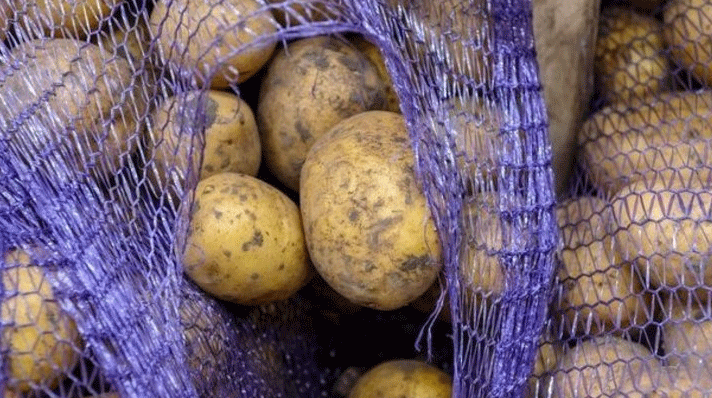
In a recent address to the State Duma, Russian Agriculture Minister Oksana Lut provided a reassuring outlook for the national potato market, stating that no major price distortions are anticipated. This stability is predicated on an expected potato harvest on par with the previous year’s levels, with an additional 300,000 tonnes projected from the organized agricultural sector. This consistent supply is crucial for maintaining market equilibrium in a country where, according to the Russian Federal State Statistics Service (Rosstat), potatoes remain a staple crop with significant production from both large-scale farms and household plots. Minister Lut’s statement directly addresses a key market concern, as price volatility for potatoes has historically been a challenge, influenced by factors like weather, storage losses, and logistical costs.
The ministry’s positive outlook extends beyond potatoes. Minister Lut also announced that the 2025 harvest of fruits and berries is poised to reach record levels, reinforcing a broader trend of growth in Russian horticulture. This is part of a strategic push for greater food self-sufficiency, most notably highlighted by the ambitious goal to fully meet domestic apple demand by 2028. This initiative is supported by state-backed investment in intensive orchards, which has already begun to reshape the Russian fruit market and reduce import dependency. Furthermore, the grain harvest remains robust, with a current bunker weight of 137 million tonnes and a clean weight forecast holding steady at 135 million tonnes, underscoring the overall strength of the Russian crop sector.
The statements from the Russian Ministry of Agriculture paint a picture of a stable and strategically developing agricultural sector. The forecast for potato price stability, driven by sufficient harvest volumes, is welcome news for both producers and consumers. Concurrently, the record projections for fruits and berries, coupled with the focused drive for apple self-sufficiency, signal a successful long-term strategy to diversify production and strengthen national food security. For agribusiness professionals, this indicates a market environment where strategic government targets are creating opportunities in horticulture, while traditional staple crops like potatoes and grains are demonstrating resilience and predictability.
