
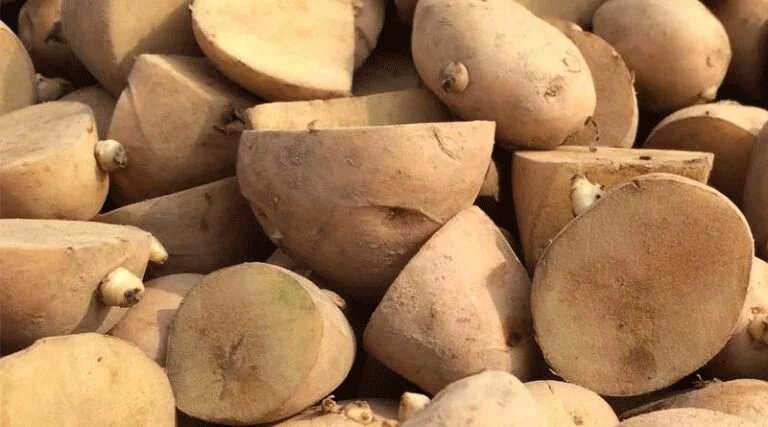
In a significant step toward agricultural modernization, Haryana’s government has partnered with the International Potato Center (CIP) to enhance the production of Early Generation Seed (EGS) potatoes in the state’s southern districts—Charkhi Dadri, Bhiwani, Mahendragarh, and Rewari. The project, backed by a ₹4.48 crore allocation for 2025–26 and a total outlay of ₹18.70 crore over four years, aims to make Haryana a self-sufficient hub for high-quality potato seeds.
Why This Matters for Indian Agriculture
India is the world’s second-largest potato producer, yet farmers often struggle with low-quality seeds, leading to yield losses of 20–30% due to diseases like late blight and viruses (Source: ICAR-CPRI, 2024). By adopting advanced technologies such as aeroponics, ARC (Advanced Rapid Cultivation), and climate-controlled facilities at the Potato Technology Center (PTC) in Shamgarh, Karnal, Haryana can produce disease-free, high-yielding seeds—reducing reliance on imports and improving farm profitability.
Economic Impact and Farmer Benefits
- Higher Income for Farmers: Quality seeds can increase yields by 25–40%, translating to better market prices (FAO, 2023).
- Reduced Input Costs: Disease-resistant seeds lower pesticide use, cutting production costs.
- Market Expansion: Haryana’s surplus seeds could supply other states, strengthening India’s ₹50,000 crore potato industry (NHRDF, 2025).
Haryana’s collaboration with CIP marks a transformative shift in Indian potato farming. By leveraging cutting-edge technology and government support, this initiative will not only boost farmer incomes but also position India as a global competitor in seed production. For agronomists, scientists, and farmers, this is a game-changing opportunity to adopt sustainable, high-yield practices.
