Russia’s agricultural sector struggles with a critical shortage of high-quality seed potatoes. According to the Russian Grain Union, the country’s self-sufficiency in seed potatoes was just 10% in 2023, leaving farmers heavily reliant on imports—a growing challenge amid geopolitical sanctions. Traditional propagation methods lead to viral degeneration, increasing disease susceptibility and production costs.
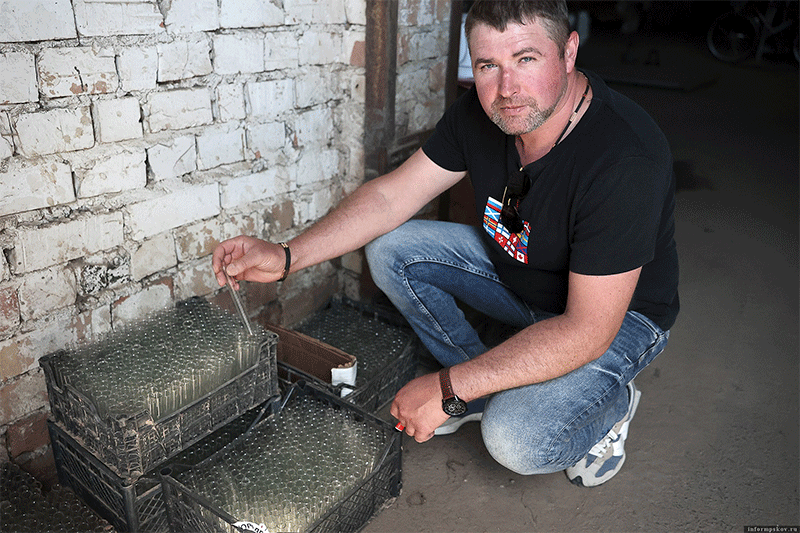
Alexander Sharshuk, a farmer in the Pechora district, highlights that seed quality determines 30–50% of crop success. To combat this, his farm partnered with the Velikie Luki Agricultural Academy to trial in vitro (test-tube) cultivation, planting 2,000 lab-grown potato plants this season.
How In Vitro Cultivation Works
The process involves:
- Extracting a meristem (growth tip) from a potato sprout.
- Sterilizing and culturing it in a nutrient-rich medium.
- Generating virus-free, disease-resistant plants.
This method ensures 100% clean genetic material, eliminating bacterial, fungal, and viral infections that plague conventional seed stocks. While the full cycle—from lab to field-ready seeds—takes 3–5 years, the payoff is higher yields and reduced pesticide use.
Challenges and Innovations
- Weather Vulnerabilities: Excessive rainfall in Pskov led to emergency declarations, damaging over 100 hectares of crops. Young in vitro plants are especially sensitive, requiring manual planting under protective covers.
- Cost Barriers: Lab-grown seedlings are expensive, but Sberbank’s financing (2.5 trillion rubles in 2024 agri-loans, including 400B for planting/harvesting) helps offset costs.
- No Herbicides: Early-stage plants cannot tolerate chemical treatments, demanding precision farming techniques.
The Bigger Picture: Russia’s Agri-Tech Push
Sberbank’s deputy manager, Alexey Nikolaev, emphasizes that biotech investments are key to boosting productivity and cutting costs. With state-backed incentives and academic partnerships, projects like Sharshuk’s could reduce import reliance and set a new standard for seed production.
In vitro potato cultivation is more than an innovation—it’s a necessity for Russia’s food security. While challenges like climate adaptability and high initial costs persist, state support, banking partnerships, and scientific collaboration are paving the way for sustainable, high-yield agriculture.
