
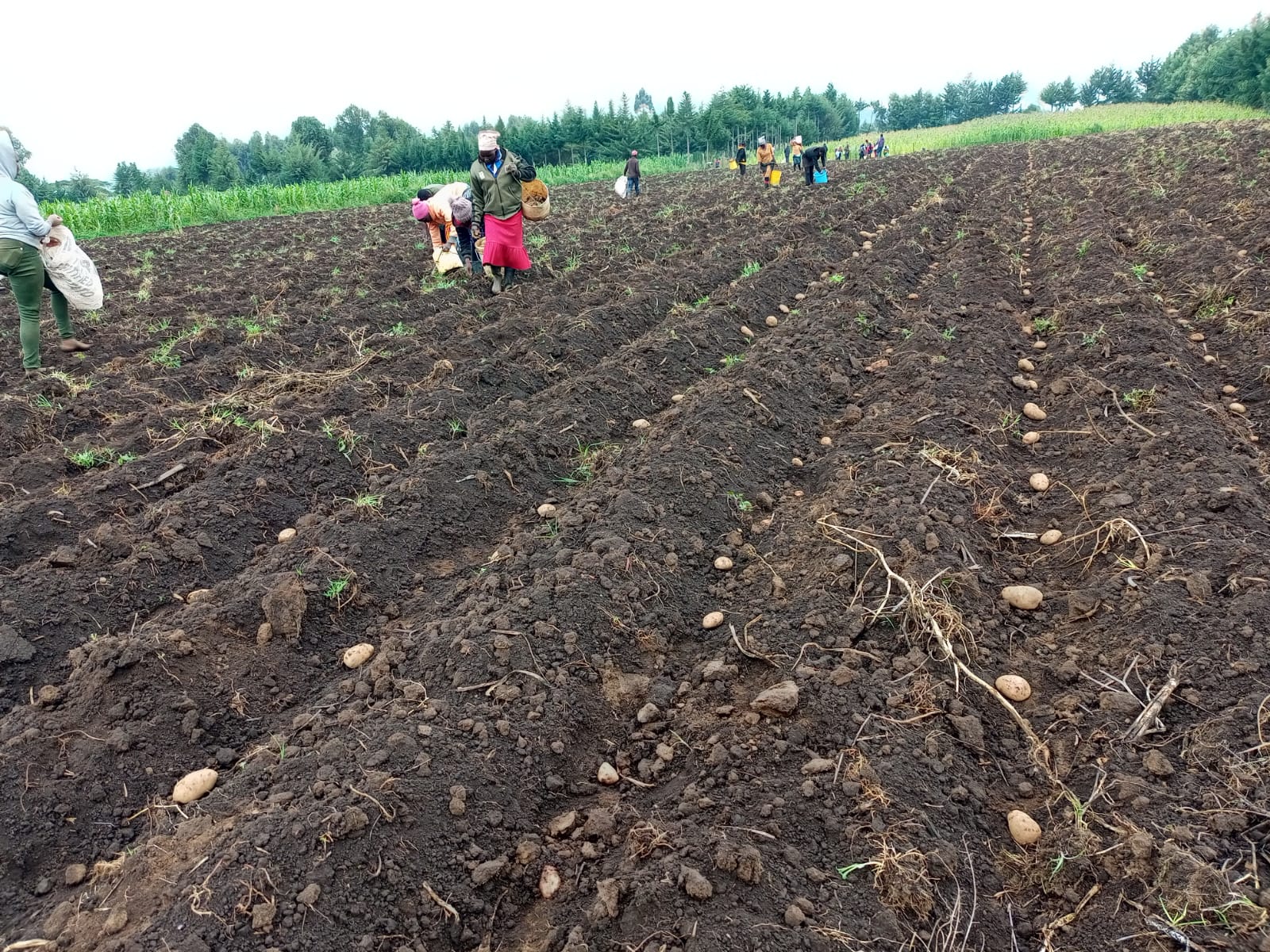
Across Kenya’s lush highlands, a quiet revolution is taking root one powered by potatoes and driven by the determination of young people who are redefining what it means to farm. Once dismissed as a fallback or “retirement” activity, agriculture is being reimagined as a vibrant, innovative and profitable enterprise. Supported by RUFORUM and the Mastercard Foundation, youth across Kenya are embracing potatoes not only as a food crop, but as a pathway to opportunity, employment and empowerment.
For decades, many young people viewed farming as a “dirty job” something you couldn’t do while holding a phone and a jembe (hoe) at the same time. They preferred to stay in towns, working in offices or engaging in marketing rather than getting their hands dirty in the fields. It was common to hear the familiar Swahili phrase, “Sasa mimi narudi nyumbani nikalime,” meaning “Now I’m going back home to farm,” often said with resignation, as if returning to agriculture marked the end of ambition.
Today, that phrase carries a new meaning. Going home to farm is no longer a retreat it’s a revolution. Across Kenya, a new generation of young people is redefining agriculture as a space for innovation, technology and enterprise proving that farming can be smart, profitable and full of purpose.
From Plan B to Plan A
For 27-year-old Tyson, who hails from Kenya’s potato-rich highlands, wealth literally grows beneath the soil. Each season, his once-idle family land bursts with rows of vibrant potato
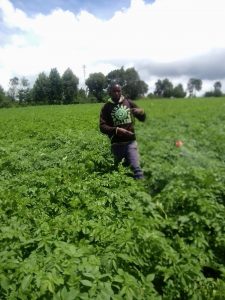
plants a living symbol of transformation.
“I don’t depend on anyone anymore I earn my living,” he says proudly. “Potatoes are not a backup plan. They are a real path.”
Through RUFORUM and Mastercard Foundation’s youth empowerment programs, young men and women like Tyson are discovering that agriculture and potatoes in particular can be a powerful vehicle for change. They are learning how to establish agribusinesses that produce certified seed, offer advisory services and market potato products. Access to digital tools, financial resources and mentorship is helping them overcome barriers that once held back their dreams.
Nakuru tubers: Youth leading from the front
At the heart of this transformation stands Nakuru Tubers, a visionary youth-led organization that is sowing potential, growing enterprise and empowering communities.
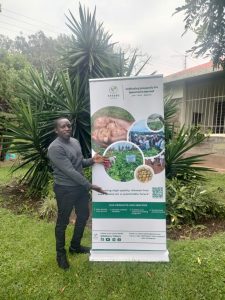
Founded by two Master’s students Rugut Kipkorir, a plant breeder “breeding new minds of empowered young men,” and Winnie Wambugu, a horticulturist “culturing new young women” into leaders of tomorrow Nakuru Tubers embodies the spirit of innovation and resilience. These young leaders are part of a generation that refuses to wait for white-collar jobs or remain spectators in their own economy.

Instead, they are becoming innovators not spectators, not job seekers, but job creators and not followers but leaders using potatoes as tools for transformation.
With support from the Mastercard Foundation through RUFORUM, Nakuru Tubers has expanded its mission to improve the livelihoods of young men and women in agriculture. Through creative, inclusive models, the organization engages youth known as Digital Connectors, who collaborate closely with Tuber Village Connectors (blend of young and aged farmers) in farming communities. Together, they deliver improved seed, climate-smart practices and market connections to farmers in villages, cooperatives and marginalized households transforming smallholder potato farming from subsistence to sustainable enterprise.
Rethinking extension: Farmer-centric, digital and inclusive
Agricultural extension is being reimagined and Nakuru Tubers is leading the way. The organization recognizes that “we cannot keep doing the same things and expect different outcomes.” For too long, extension services were limited to passing on information. Nakuru Tubers has changed that, turning extension into a dynamic process of connection,
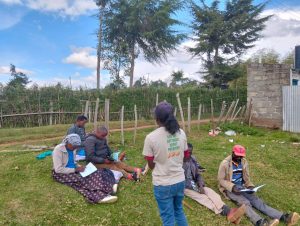
collaboration and empowerment.
Extension is more than advice it is the bridge between research and reality. When that bridge is strong, farmers thrive. When it is weak, they are left behind. Nakuru Tubers is strengthening this bridge by training its Digital Connectors young, tech-savvy agricultural professionals to deliver support directly to farmers’ doorsteps.
Recently, these Digital Connectors participated in a Training Workshop on Integrated Agricultural Extension Approaches, organized by FAO, AGRA, AFAAS, KeFAAS and China Agricultural University. This collaboration has equipped them with digital tools, participatory learning methods and people-centered strategies for improving how agricultural knowledge reaches the farm gate.

At Nakuru Tubers, Digital Connectors are the trusted allies of farmers. They ensure access to certified seed, accurate agronomic advice and up-to-date information on climate, soil health and market trends. By integrating technology into agriculture, they are proving that digital transformation is the new frontier of extension bringing the future of farming to the fingertips of smallholders.
Through this approach, Nakuru Tubers demonstrates that last-mile delivery is not a buzzword it’s a daily reality.
Farming smarter, feeding more
Across Kenya, young farmers are redefining success proving that agriculture is both a science and a business.

In Elburgon, Molo Subcounty, Purity has turned her passion for potato farming into a thriving enterprise. With training and mentorship, she now manages production cycles, links with buyers through digital platforms and practices climate-smart techniques.
In Mauche Ward, Njoro Subcounty, Dennis is growing the Unica variety, known for its resilience and high yield. “I chose Unica because it performs well even in tough conditions,” he says. “It gives me confidence that farming is a real business.”
In Nyandarua’s Oljorook, Irene is learning value addition from Nakuru Tubers’ digital and field experts transforming fresh tubers into crisps and processed products that attract new markets. Her journey represents how digital mentorship and agro-innovation can open new income streams for youth.
Also in Nyandarua’s Olkalau, Joseph is championing soil health and regenerative potato farming, integrating traditional wisdom with digital soil testing tools to boost productivity sustainably.
Meanwhile, in Kuresoi, Nakuru County, Jackline leads efforts in clean seed multiplication — empowering local farmers to adopt certified, disease-free planting material that improves yields and food security.
In Nyandarua, Veronicah is mastering apical cutting production, producing clean seed potatoes that strengthen the base of Kenya’s potato value chain.
Together, these young changemakers represent the heartbeat of a new agricultural generation digital, determined and deeply connected to their communities.
Youth at the last mile
Across Kenya’s potato-growing regions, young professionals many trained by Nakuru Tubers are transforming extension and agribusiness. From digital platforms linking farmers to buyers, to seed certification, post-harvest handling and value addition, they are strengthening every link in the chain.
Backed by RUFORUM, the Mastercard Foundation and Nakuru Tubers, these youth are not just participating in agriculture’s evolution they are leading it.
A future rooted in potatoes
The partnership between RUFORUM, the Mastercard Foundation and Nakuru Tubers is giving Kenya’s youth a reason to stay on the land and thrive. Potatoes are becoming more than just food they are a pathway to innovation, inclusion and prosperity.
“This is what youth-led African agriculture looks like vibrant, determined and full of promise,” says Peter CFO KeFAAS . “With the right support, young people are transforming potatoes into engines of opportunity.”
For Tyson, Purity, Dennis, Veronicah, Irene, Jackline and Joseph, potatoes are more than crops. They are the foundation of thriving businesses, the source of independence and the root of a brighter agricultural future for Kenya.