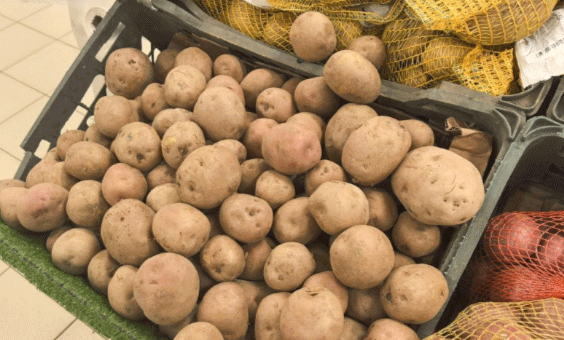
For four consecutive weeks, Russia has seen deflation in fruit and vegetable prices, including potatoes, according to Rosstat. However, retail prices remain stubbornly high: young potatoes sell for ~60 RUB/kg, while washed packaged potatoes cost 229 RUB for 2.5 kg. This marks a slight improvement from spring 2024, when prices peaked at 130–150 RUB/kg, but remains far above pre-crisis levels (17–19 RUB/kg in 2022–2023).
Production Challenges
Yevgeny Simakov, Head of Potato Breeding at the Lorch Federal Research Center, cautions against optimism. Cold springs, excessive rainfall, and diseases like Phytophthora and Rhizoctonia have damaged yields. Although the 2024 harvest is projected at 7.5 million tons (similar to 2023), this may fall short of demand, necessitating imports as in previous years.
Price Projections
- Short-term: Early harvest prices are artificially inflated (~50 RUB/kg farmgate; ~80 RUB/kg retail), but market corrections are expected by mid-autumn.
- Medium-term: Mass harvesting in September could push prices down to 45–50 RUB/kg, but stored potatoes will rebound to 60+ RUB/kg by December.
Structural Issues
- Cost Pressures: Sanctions have disrupted access to imported machinery and fertilizers, raising production costs.
- Supply Shifts: Many farmers reduced potato acreage after the 2022–2023 price crash, pivoting to processing—now facing raw material shortages.
- Demand Decline: Annual per-capita potato consumption fell from 100 kg to 55 kg, mitigating deficit risks but not price volatility.
While recent price drops offer temporary relief, systemic challenges—weather risks, input costs, and supply chain gaps—will sustain elevated retail prices. Farmers must prioritize disease-resistant varieties and cost-efficient technologies, while policymakers should address input accessibility to stabilize the sector.
