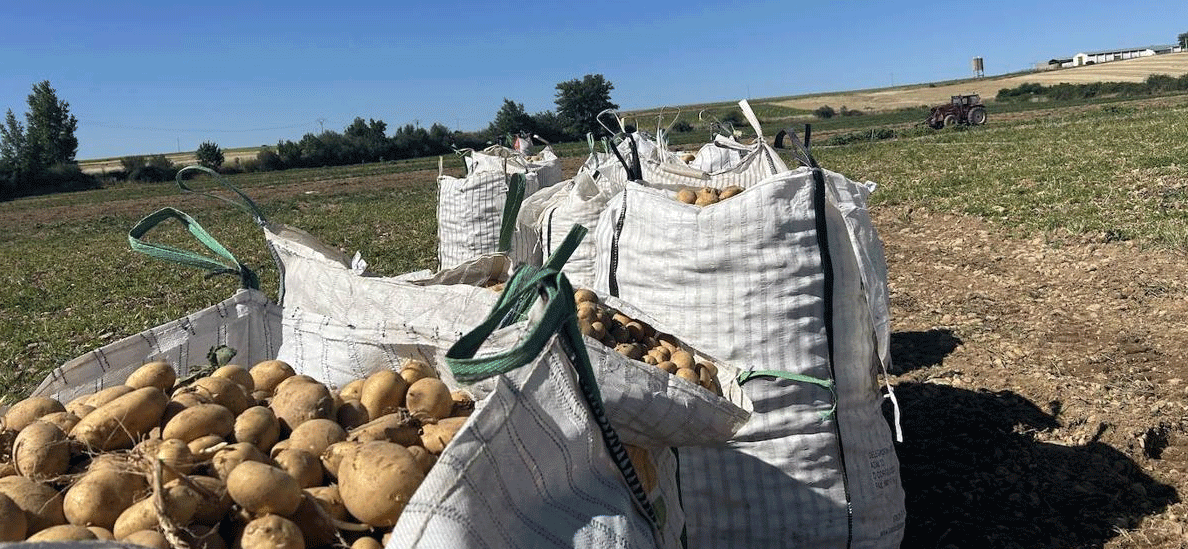
The potato harvest in Salamanca, Spain, has started under a cloud of concern as prices drop significantly compared to previous years. According to the Interprofesional de la Patata de Castilla y León, farmers are receiving an average of €0.25–0.30 per kilogram, a sharp decline from €0.50/kg last July and €0.40–0.50/kg two years ago.
Overproduction and Increased Competition Drive Down Prices
Several factors are contributing to the depressed market:
- Expanded Cultivation Area: Castilla y León planted 18,529 hectares of potatoes this season—1,106 more than last year. Salamanca alone increased its potato fields by 461 hectares, reaching 5,208.86 hectares, the highest since at least 2015.
- Foreign Competition: France has significantly increased production, while potatoes from Cartagena, Seville, Egypt, and Portugal continue to flood the market.
- Lower Exports: Reduced demand from southern Spain and traditional buyers like Portugal has exacerbated the surplus.
Farmer Reactions and Industry Warnings
Some farmers, fearing further price drops, have begun harvesting early, but industry leaders urge caution. Juan Sandonís, president of the Potato Interprofessional Organization, warns:
*”If farmers panic and burn or dump potatoes, it could trigger a small market collapse. Prices of €0.25–0.30/kg are acceptable if stable, but rushed harvesting will only worsen the situation.”*
Alberto Duque of COAG adds that at these prices, many farmers risk not covering production costs, particularly in high-expense regions.
Market Outlook: Can Prices Stabilize?
The bulk of Salamanca’s harvest will hit the market in mid-August and September, coinciding with delayed shipments from Badajoz and Portugal. France remains a major competitor, with its own expanded production.
Sandonís suggests staggered harvesting to prevent oversupply and stabilize prices. Meanwhile, disease pressure (such as late blight) remains a concern, though currently under control in Salamanca.
Strategic Harvesting Needed to Avoid Crisis
With potato prices at a multi-year low, farmers must balance urgency with caution. Panic selling could deepen losses, while a controlled, phased harvest may help stabilize the market. Industry cooperation and adherence to contracts (typically at €0.22–0.25/kg) will be crucial in navigating this challenging season.
