
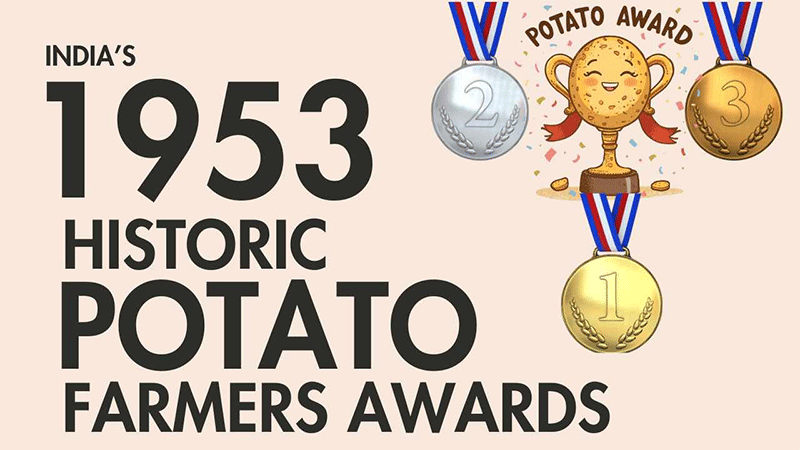
In the nascent years of Indian independence, a quiet agricultural revolution was brewing in the fields of West Bengal. On January 24, 1953, this culminated in a landmark event: the first Farmers’ Award in independent India, presented to potato growers in Hooghly district. The winning farmer, Girindranath Saha of Haripal, achieved a staggering yield of approximately 21 metric tonnes per acre (52 tonnes per hectare). His contemporaries, Dukadi Ghosh and Subalchandra Padui, followed closely with 19 and 18.3 tonnes per acre, respectively. For a nation striving for self-sufficiency, these figures were more than just numbers; they were a beacon of potential. Astonishingly, these mid-20th-century yields surpass the current average yield of the popular Kufri Jyoti variety in West Bengal, which stands at 25-30 tonnes per hectare, highlighting a significant yield gap that modern agriculture must address.
The legacy of these pioneers is deeply etched into India’s current agricultural landscape. West Bengal has solidified its role as a potato powerhouse. For the 2024-25 season, the state has projected a record production of 14 million tonnes (1.4 crore metric tonnes) from an area of 5.13 lakh hectares, a 30% increase from the previous year, cementing its position as India’s second-largest potato producer. At the national level, this contributes to an all-India production record of 60.18 million tonnes (as of 2024-25). Hooghly district remains the epicenter of this success, contributing over 40% of West Bengal’s total output. However, persistent intra-district yield disparities—from a high yield index of 133.05 in Pursurah block to a low of 20.37 in Khanakul-II—signal a clear need for targeted interventions in soil health, irrigation, and the adoption of precision farming technologies.
The 1953 Hooghly awards were not merely a ceremonial recognition; they were a validation of superior farm-level management and an intimate understanding of local agro-ecology. The challenge for today’s agronomists, engineers, and farmers is to bridge the gap between the demonstrated potential of the past and the average yields of the present. By integrating the timeless principles of dedicated cultivation exemplified by Saha, Ghosh, and Padui with modern scientific advancements—such as high-yield, climate-resilient varieties, data-driven resource management, and efficient post-harvest logistics—we can unlock the full productivity of India’s potato sector. The pioneers of 1953 proved what was possible; it is now our responsibility to scale that success for national food security.
