
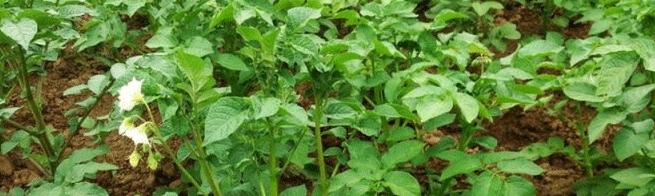
Researchers at the Komi Scientific Center (Ural Branch of Russian Academy of Sciences) have achieved a significant milestone with their newly patented ‘Pechera’ potato (Patent #14077, July 2025). This remarkable variety demonstrates exceptional resilience in the harsh growing conditions of Russia’s northern regions while maintaining premium culinary qualities.
Key Characteristics & Performance Data
- Climate Adaptation
- Survives returning spring frosts (critical for northern regions with unpredictable weather)
- Maturity: 65-80 days (mid-early variety)
- Yield: 381-460 quintals/hectare (38-46 tons/ha)
- Exceptional Tuber Quality
- Size: 115-157g per tuber (surpasses regional standards)
- Appearance: Light beige skin with white eyes
- Starch content: 11.0-14.6% (ideal for diverse culinary uses)
- Marketability: 97% grade-out rate
- Storage & Disease Resistance
- Shelf life: 96% preservation rate through mid-spring
- Disease resistance:
- Phytophthora infestans (late blight)
- Rhizoctonia solani
- Common scab
- Potato cancer (Synchytrium endobioticum)
- Golden and pale cyst nematodes (Globodera rostochiensis/G. pallida)
Why This Matters for Global Potato Production
- Climate resilience: With frost tolerance, ‘Pechera’ could expand potato cultivation into previously marginal areas
- Reduced crop losses: Disease resistance traits may lower pesticide use by 30-40% (FAO estimates)
- Economic potential: High yields and storage stability offer better ROI for smallholders
Comparative Advantages
| Trait | ‘Pechera’ Potato | Standard Northern Varieties |
|---|---|---|
| Frost tolerance | Excellent | Moderate |
| Yield potential | 38-46 t/ha | 25-35 t/ha |
| Nematode resistance | Present | Often lacking |
| Storage loss | 4% | 10-15% |
Culinary Profile & Market Potential
The variety’s white flesh, medium texture, and excellent flavor make it versatile for:
- Boiling and salads (holds shape well)
- Mashing (creamy texture)
- Baking and roasting
A Game-Changer for Cold-Climate Agriculture
The ‘Pechera’ potato represents a significant advancement in climate-resilient crop development. Its combination of:
- Environmental stress tolerance
- Disease resistance
- Superior storage qualities
- Market-friendly characteristics
makes it particularly valuable as climate change creates more unpredictable growing conditions. This variety could serve as a model for future crop development targeting marginal agricultural zones.
