
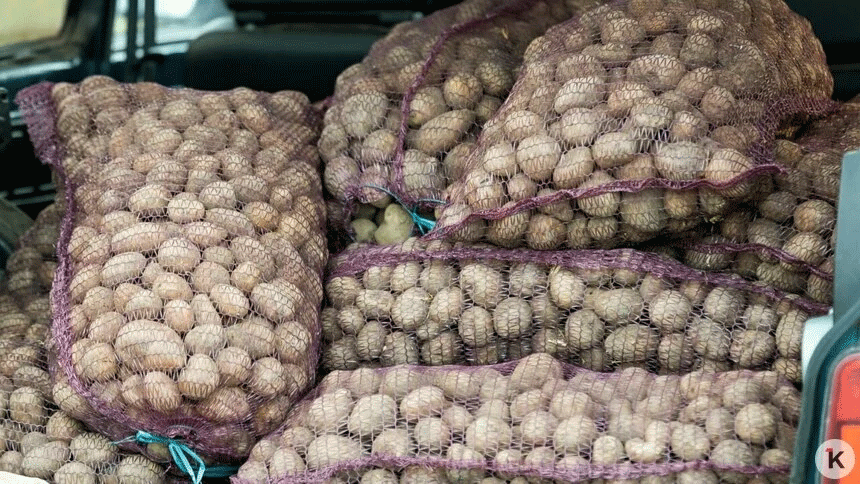
At the All-Russian Field Day-2025 in Volgograd, Artem Ivanov, the Minister of Agriculture of the Kaliningrad region, announced the region’s agricultural projections for the coming year. While potato production is expected to grow by 1%, vegetable output could see a 4% increase due to improved cultivation practices and expanded planting areas.
However, the region faces significant setbacks in fruit and berry production, with forecasts indicating a decline of over 50%—a direct consequence of severe spring frosts. Similar weather conditions have impacted other crops, with 1,500 hectares of rapeseed lost and a 15% yield reduction in surviving areas.
On a positive note, winter crops, which suffered from sudden temperature drops, have recovered on 90% of the affected land. This resilience highlights the effectiveness of adaptive farming techniques and government support programs.
Global and Regional Context
Recent studies show that climate volatility is increasingly affecting agriculture worldwide. According to the FAO’s 2024 report, extreme weather events have reduced European fruit yields by an average of 12-20% in frost-prone regions. Meanwhile, potato production in Russia has seen modest growth (0.8-1.5% annually), aligning with Kaliningrad’s projections.
Kaliningrad’s 2025 agricultural outlook presents a mixed scenario: while potatoes and vegetables show stable growth, fruit and berry farmers must brace for heavy losses. The recovery of winter crops demonstrates the importance of climate-resilient farming, but long-term strategies—such as frost-resistant varieties and improved irrigation—are needed to mitigate future risks.
