
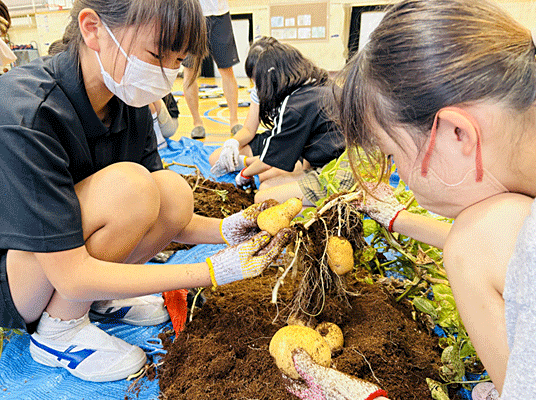
In 2025, Calbee initiated a trial program in two Japanese elementary schools—Setagaya’s Nakazato Elementary and Osaka’s Toyosaki Elementary—where around 80 students cultivated potatoes using Potato Bags, a portable, soil-filled growing medium developed by Calbee Potato and Protoleaf. The program spanned five months (March to July), allowing children to experience planting, nurturing, harvesting, and finally processing their potatoes into chips12.
Key Features of the “Potato Bag” System
- User-Friendly Cultivation
- The Potato Bag contains a pre-fertilized, lightweight soil mix (coconut coir and husk chips), eliminating the need for traditional tilling or large farming spaces14.
- The accompanying seed potato, Poroshiri, is an original variety developed over a decade by Calbee Potato, optimized for small-scale planting without cutting110.
- Sustainability & Accessibility
- The soil is 100% plant-based, allowing disposal as burnable waste (depending on local regulations)12.
- Ideal for urban schools with limited gardening space, such as Nakazato Elementary, which has a rubberized playground and minimal soil exposure for students47.
- Educational Impact
- Beyond farming, the program integrates food processing, teaching children the full journey from farm to table110.
- Calbee has a long-standing Food Communication initiative, reaching over 1.6 million children since 2003210.
Broader Implications for Agriculture
This initiative demonstrates how simplified, small-scale farming methods can:
- Promote Agri-Education – Encouraging youth engagement in agriculture amid declining rural labor forces.
- Support Urban Farming – Offering scalable solutions for cities with limited arable land.
- Enhance Sustainability – Reducing soil waste and utilizing biodegradable materials.
Calbee’s Potato Bag Shokuiku program is more than an educational tool—it’s a model for future-proof farming techniques that balance productivity, sustainability, and accessibility. As global agriculture faces challenges like urbanization and climate change, such innovations could inspire new approaches to crop cultivation and food education.
