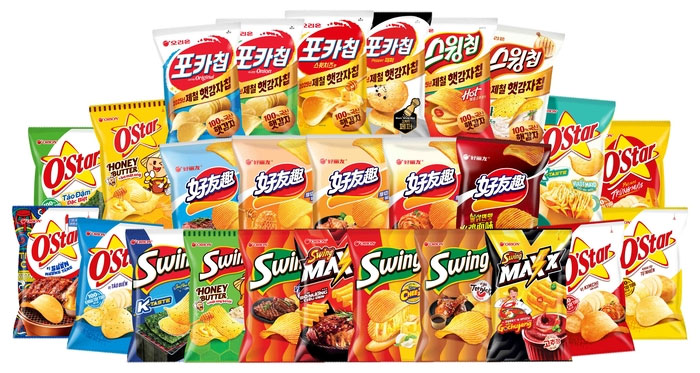
The remarkable global success of Orion’s “fresh potato chips” – with cumulative sales exceeding ₩4 trillion – is not just a marketing story; it is a case study in sophisticated agricultural supply chain management and dedicated crop science. Brands like “Poca Chip” (leading market share in Vietnam) and “Swing Chip” (₩160 billion in sales in China) are powered by an annual procurement of over 230,000 metric tons of potatoes, a figure that represents a significant portion of South Korea’s total production.
This scale necessitates a globally dispersed, science-backed agricultural strategy. Orion’s operation is a multi-faceted system crucial for its stability and quality:
- Global Sourcing & Contract Farming: To ensure a stable supply, Orion sources potatoes not only from domestic Korean farmers but also through contracts in Vietnam and from its own farm in Inner Mongolia, China. Their total contracted farmland spans 3,508 hectares. During off-seasons, they supplement with imports from the US and Australia, creating a truly global, year-round potato pipeline.
- Dedicated R&D for Specific End-Use: Since 1988, Orion’s Potato Research Institute in Pyeongchang has been developing proprietary potato varieties optimized specifically for chip quality. Their successes include the ‘Dubaek’ (2000) and ‘Jinseo’ (2023) varieties, bred for ideal solid content, shape, and processing characteristics. This focus on developing cultivars for a specific industrial use mirrors a global trend where over 60% of potato breeding programs now prioritize traits for processing—such as low sugar content and uniform size—over traditional table stock qualities (International Potato Center, 2024).
- Seed Export and Localized Breeding: Moving beyond mere sourcing, Orion has begun exporting seed potatoes of its proprietary varieties to Vietnam and has developed a new cultivar, ‘OA2132’, specifically for the Chinese market, where it is pursuing plant variety protection. This strategy of localizing the entire supply chain, from seed to shelf, ensures quality control and reduces logistical risks.
The impact on the agricultural sector is profound. Orion’s demand creates a stable, high-volume market for contract farmers across multiple countries. Their focus on developing chip-specific varieties provides growers with access to premium seeds designed for a guaranteed offtake, potentially increasing their profitability and yield consistency.
Orion’s success transcends snack food popularity; it demonstrates the powerful synergy between advanced agricultural science and global market strategy. For farmers, agronomists, and agricultural engineers, Orion presents a model of how deep vertical integration—from gene to chip—can de-risk production, add tremendous value to a staple crop, and create resilient, international supply chains. It underscores that the future of competitive agriculture lies not just in yield, but in developing specialized cultivars for specific high-value markets and controlling the chain from seed genetics to the consumer product.
