
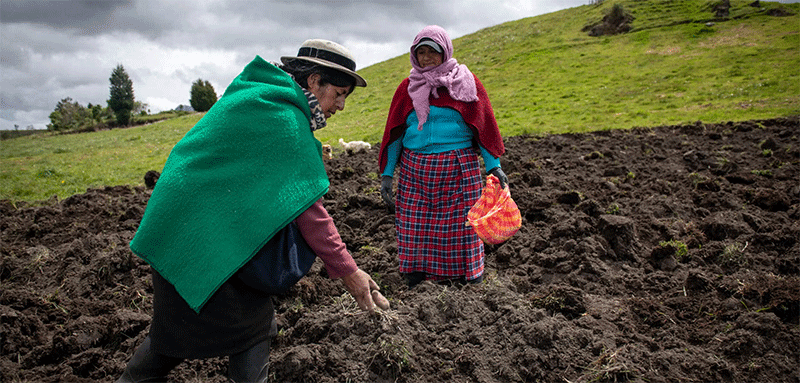
At 10,000 feet in the Ecuadorian Andes, a women-led farming collective is confronting climate change and agricultural homogenization by reviving a rich legacy of native potatoes. Their story is a powerful case study in resilience, blending ancestral knowledge with modern permaculture techniques to secure food sovereignty and community health.
Against the backdrop of the Chimborazo volcano, the San Juan Women’s Group labors on a rented hillside plot. They are reviving native potato varieties like the shungo, a purple tuber named for the “little heart” visible when cut open. These potatoes are part of a stunning agro-biodiversity; over 4,000 types of potato were historically cultivated in the Andes, but many have disappeared from modern cultivation. The women, using broad-headed hoes and diagonal furrowing techniques for water management, are determined to bring them back. “If we lose this knowledge forever, it will be very hard to return,” says farmer Ana Hortensia Tacuri Socas.
Ancestral Knowledge Meets Modern Challenges
The group’s methodology is a hybrid of inherited wisdom and new learning. They have transitioned to natural fertilizers, creating biol (a fermented liquid fertilizer) through a CARE-supported permaculture school. Hortensia notes that in their own trials, the natural methods proved most effective for their native varieties. This shift is also a health imperative; she observes a decline in community health, attributing it to the increased use of agricultural chemicals, a concern echoed in global studies linking pesticide exposure to chronic illnesses.
However, their efforts are set against the stark realities of climate change. “Sometimes it rains, sometimes it doesn’t, and sometimes frost destroys everything,” says group leader Fabiola. Their adaptation strategies are both innovative and traditional: burning trash piles or placing water buckets in fields to draw away frost on cold nights. This aligns with a 2023 FAO report highlighting that smallholder farmers, particularly women, are on the front lines of developing localized, often knowledge-intensive, adaptation practices to protect their crops from increasing climatic volatility.
The Socio-Agricultural Impact: Water, Women, and Leadership
The challenges extend beyond the field. Access to clean, reliable water is a critical bottleneck, with aging infrastructure failing the community. Furthermore, the women are reshaping gender dynamics in Andean agriculture. With men often migrating for work, women like Fabiola now lead community meetings and mingas (collective work projects), positions once inaccessible to them. “Years ago, when I was young, women couldn’t speak in public,” Hortensia recalls. “But now, there are women presidents of communities… We are respected, too, because we have knowledge that makes a difference.”
The work of the San Juan Women’s Group is more than subsistence farming; it is a holistic model of agro-ecological resilience. They demonstrate that the future of sustainable agriculture may depend on preserving the past—leveraging ancestral crop diversity and natural practices to build food systems that are nutritious, climate-resilient, and community-controlled. Their success underscores a critical lesson for agronomists and policymakers worldwide: supporting indigenous knowledge and empowering women farmers are not just social goals, but essential strategies for agricultural adaptation and biodiversity conservation. As Hortensia puts it, their hope comes from agriculture itself—a sentiment that resonates with anyone invested in a viable future for farming.
