
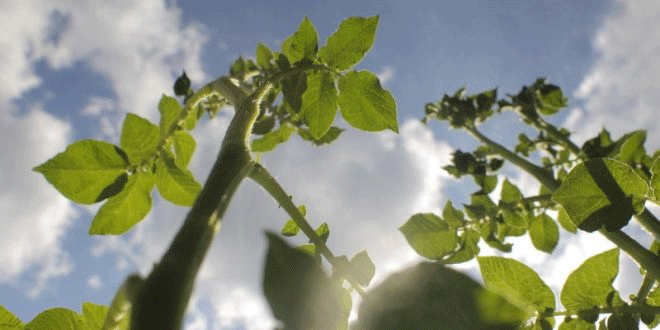
For generations, the removal of potato shaws—the leafy stems and foliage—has been a standard, necessary practice in seed potato production to ensure tuber quality and disease control. This practice generates a vast, underutilized biomass stream, typically viewed as waste. Today, a pioneering consortium in Scotland is fundamentally reframing this by-product as a valuable feedstock for the global biochemical market. The project, a collaboration between the University of Aberdeen, the James Hutton Institute, and the farmer-owned cooperative Grampian Growers, is successfully extracting solanesol from potato shaws, opening a transformative revenue stream for growers and setting a new standard for circular agriculture.
The scale of the raw material is significant. The Scottish seed potato sector, valued at £24.2 million, generates over 51,000 tonnes of shaws annually from its 12,800 hectares of cultivation. Historically, this biomass represented a disposal challenge. The consortium’s innovation lies in targeting solanesol, a high-value isoprenoid compound. Currently, the global solanesol market, driven by demand for Coenzyme Q10 (CoQ10) in nutraceuticals and pharmaceuticals and Vitamin K2, is heavily reliant on tobacco as a source. The global CoQ10 market alone is projected to exceed $1.2 billion by 2028, growing at a CAGR of over 10%. By establishing potato shaws as a sustainable, non-tobacco alternative, this project taps into a lucrative and expanding market. Initial estimates suggest Scotland’s shaw waste could yield up to 120 tonnes of solanesol per year, creating a substantial new income layer for growers and strengthening supply chain resilience for end-users seeking ethical, plant-based sourcing.
Supported by Innovate UK’s Launchpad programme, this venture is more than a technical success; it’s an economic and environmental model. By valorizing waste, it directly addresses the dual pressures of farm profitability and sustainability. Processing shaws into solanesol reduces the carbon footprint associated with waste disposal and provides a domestic, bio-based alternative to imported or tobacco-derived ingredients. As Professor Giovanna Bermano notes, it positions the UK at the forefront of sustainable “cosmeceutical” innovation. For farmers and cooperatives like Grampian Growers, it exemplifies how aggregation and shared investment in R&D can unlock value from existing operations, enhancing economic resilience in rural communities.
The Scottish potato shaw project is a compelling blueprint for the future of high-value agriculture. It demonstrates that next-generation farm profitability will come not only from maximizing primary yield but from strategically mining the biochemical potential of agricultural residues. For farmers, agronomists, and industry stakeholders worldwide, this initiative underscores a critical opportunity: to audit waste streams, form strategic research partnerships, and invest in technologies that convert low-value biomass into premium biochemicals. By doing so, the agricultural sector can dramatically improve its per-hectare revenue, contribute to a genuine circular economy, and reduce dependency on volatile commodity markets, securing a more innovative and sustainable future.
