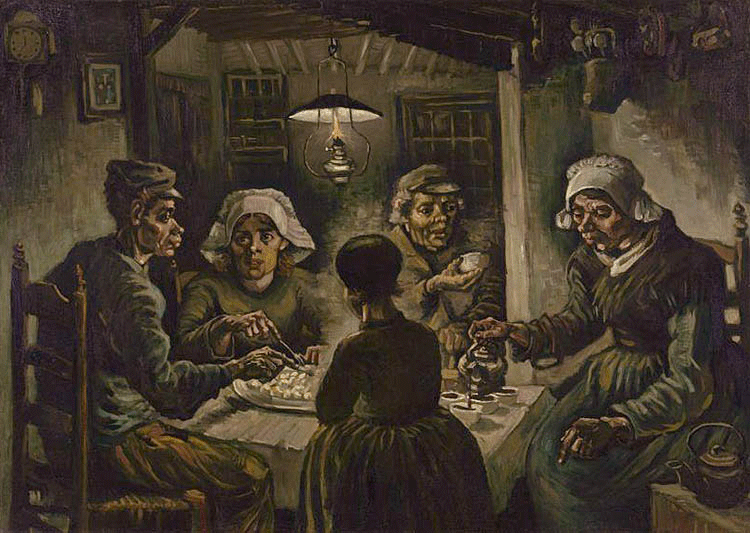
Marking the 140th anniversary of Vincent van Gogh’s masterpiece, “The Potato Eaters,” the “PATATE” exhibition at the Vincent van GoghHuis in Zundert, Netherlands, offers a profound reflection on our relationship with the humble tuber. While Van Gogh’s 1885 painting was a raw, humanist portrait of peasant life, centering on the shared meal as a symbol of hardship and dignity, the contemporary artists in “PATATE” have largely shifted their gaze from the eaters to the eaten. The potato itself becomes the protagonist—examined, monumentalized, and deconstructed in over 30 works. This shift from a socio-economic narrative to a botanical and cultural one mirrors the potato’s own journey in the global food system. From a staple that underpinned populations, it has now become a crop of immense diversity and scientific interest, with global production exceeding 376 million metric tons (FAO, 2022), and its role evolving from mere sustenance to a source of nutrition, bio-materials, and culinary innovation.
The artworks on display, such as Juliette Karlsson’s towering “POTATO TOTEM XXL” and Ellen Mandemaker’s photographic studies of bizarre tuber morphologies like ‘Lady Rosetta’, do more than just aestheticize the crop. They force a conversation about biodiversity, form, and the very nature of agricultural produce. Mandemaker’s work, in particular, which captures the “most bizarre appearances” of the root, unintentionally highlights the work of plant breeders and the vast phenotypic plasticity of the Solanum tuberosum species. This artistic focus aligns with scientific priorities; preserving genetic diversity in global seed banks is critical for breeding resilience against climate change and disease. The exhibition prompts us to see what farmers and agronomists know intimately: that each variety, from a perfectly uniform Russet to a gnarled heirloom, tells a story of genetics, environment, and human selection.
The “PATATE” exhibition serves as a powerful cultural barometer. It demonstrates that the potato’s significance has expanded far beyond its nutritional and economic value. For those in agriculture, this external perspective is invaluable. It underscores that the work of producing food is not just a technical or economic endeavor, but a deeply cultural one. The potato is no longer just a commodity; it is a symbol of nature’s ingenuity, a canvas for artistic expression, and a testament to the enduring, if often unspoken, connection between the soil, the crop, and the culture it sustains. Engaging with this cultural narrative can help the agricultural sector communicate its own story with greater depth, connecting the science of production with the art of appreciation.
