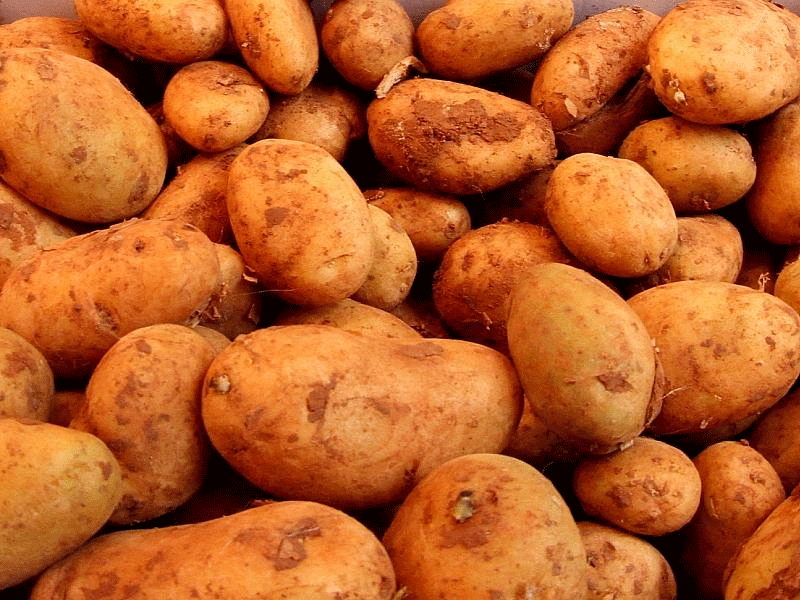
The German potato sector is facing a severe paradox in 2025: a bumper harvest has become a financial disaster. With a yield of 13.4 million tonnes—the highest in 25 years, representing a 5.3% increase from the previous year and 17% above the recent average—the market is saturated. This surplus of 2.4 million tonnes, driven by a 6.7% expansion in cultivation area to 301,000 hectares, has caused prices to plummet. The dire economic reality for farmers, as reported, is the destruction of harvests or the diversion of food-grade potatoes to biogas plants, a painful waste of resources and labor.
This situation has sparked a significant political response. Stephan Mayer, an interior policy expert for the Christian Social Union (CSU), has publicly demanded state intervention, calling for the creation of a “national potato reserve.” Mayer argues that it is illogical for the government to urge citizens to stockpile food for emergencies while simultaneously allowing staple foods to be destroyed. His proposal suggests the state should purchase the surplus to create a strategic reserve, potentially in preserved forms like canned potatoes, framing it as a dual-purpose investment in national food security and a direct support mechanism for struggling farmers. This idea emerges in a global context where food security is increasingly prioritized. The EU’s “Farm to Fork” strategy emphasizes resilient supply chains, and while it focuses on sustainability, the German proposal highlights a parallel need for buffer mechanisms against market volatility and geopolitical risks, echoing the function of historical grain reserves but for a modern staple.
The CSU’s proposal for a national potato reserve is a dramatic intervention that underscores the failure of current market mechanisms to handle extreme surplus. For agricultural professionals, it opens a critical debate on the role of the state in market stabilization and long-term food security planning. While the logistical and economic feasibility of such a reserve requires rigorous analysis—considering storage costs, processing, and market distortion—the proposal rightly highlights an urgent need for systemic solutions. It challenges policymakers and the industry to move beyond crisis reaction and develop robust strategies that protect both producers from ruin and the population’s food supply from disruption.
