
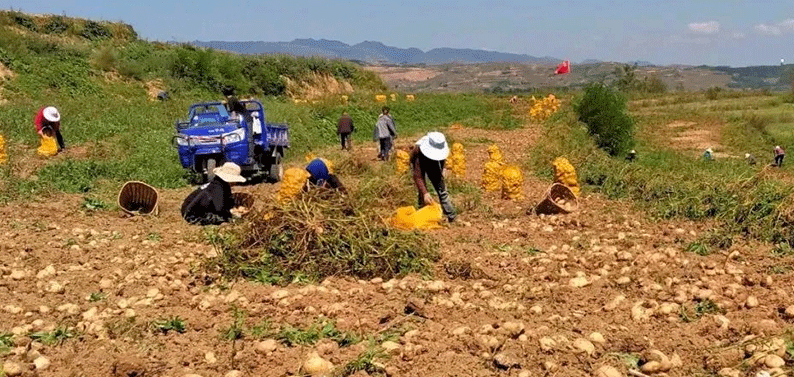
In the rolling fields of Xihe County, a humble tuber is fueling an agricultural revolution. By mastering the entire value chain—from virus-free seed labs to branded consumer products—this region has transformed potato farming into a sophisticated, high-value industry that guarantees farmer income and drives rural prosperity.
Xihe County has long recognized the potato as its cornerstone crop for wealth generation. With a steadfast commitment to scale and quality, the county maintains a stable planting area of over 200,000 mu (approximately 13,333 hectares) of high-quality potatoes annually. The strategic genius, however, lies in its meticulous focus on the “seed chip” and a fully integrated industrial chain. By establishing a 4,000-mu dedicated seed breeding base in core townships and a professional 540-square-meter tissue culture and virus testing lab, Xihe ensures elite genetics are the foundation of its success. This scientific approach, combined with advanced field practices and deep-processing ventures, has created a resilient model that other agricultural regions can emulate.
The “Seed Chip” Foundation: Science at the Source
Understanding that yield and quality are won at the propagation stage, Xihe made a strategic investment in seed technology. The Minwang Potato Planting Professional Cooperative’s laboratory is the nerve center of this effort. Here, professional tissue culture techniques produce robust plantlets, while rigorous virus testing ensures only the healthiest, most productive seed tubers are approved for multiplication. This focus on “clean seed” is a critical defense against yield loss; globally, potato viruses can reduce yields by 30-50%, according to the International Potato Center (CIP). By controlling this variable at the source, Xihe provides its farmers with a significant upfront advantage.
Precision Agriculture for Maximized Output
The county’s success extends beyond the lab into the field through an effective demonstration and extension mechanism. A core tactic is the implementation of comprehensive soil testing and formulated fertilization. By precisely tailoring nutrient applications to the specific needs of different plots, farmers optimize input use, reduce environmental impact, and maximize tuber quality and yield. This practice of precision agriculture is a growing global trend; a 2023 report in Nature Food highlighted that site-specific nutrient management can increase fertilizer use efficiency by 15-30%, simultaneously boosting profitability and sustainability.
Closing the Loop: Integration and Value Addition
The most impressive aspect of Xihe’s model is its development of a complete industrial chain. The county has moved far beyond selling raw commodities. By consolidating regional resources and supporting leading processing enterprises, it has actively developed its deep-processing capabilities. This strategic move into value-added products—such as potato starch, flakes, fries, and other specialty foods—allows the county to capture more revenue from each tuber harvested. This is crucial for insulating farmers from the price volatility of the fresh produce market. Furthermore, by actively expanding sales channels and building branded products, Xihe ensures a stable and profitable outlet for its harvests.
Xihe County offers a powerful blueprint for rural revitalization through agricultural specialization. Its model demonstrates that sustainable profitability is not achieved by simply planting more acreage, but by building a sophisticated, science-driven, and fully integrated system. The county’s journey from field to fortune underscores several critical success factors: the non-negotiable importance of high-quality seed stock, the yield and efficiency gains from precision farming practices, and the economic resilience created by capturing value through processing and branding. For other regions looking to empower farmers and build a thriving agricultural economy, Xihe’s potato empire provides a compelling and replicable case study.
