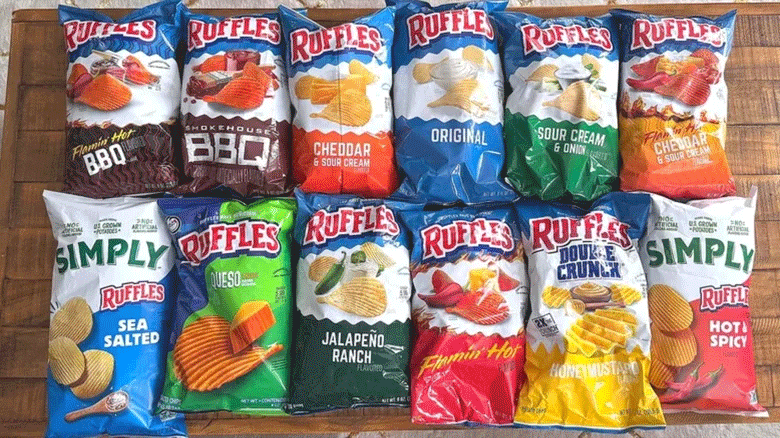
A recent taste-test review declaring Ruffles’ Cheddar and Sour Cream the brand’s best flavor provides a clear market signal: robust, tangy, and dairy-forward seasoning profiles are highly valued in the snack aisle. This flavor, launched in 1985, has built a loyal following, with online communities like Reddit affirming its “addicting” quality. The success of such a product is a direct downstream result of upstream agricultural and food science, validating the cultivation of potato varieties with specific gravity and sugar content ideal for the rigid structure required to hold heavy powder seasonings.
However, this success story is shadowed by a growing consumer trend: widespread complaints of “less seasoning” on chips. A sentiment echoed across forums suggests a perceived reduction in flavor powder application, with users noting that “half the chips taste plain.” This perception aligns with a broader industry strategy known as “skimpflation” or “shrinkflation,” where brands subtly reduce ingredient quality or quantity to manage rising production costs without significantly altering package size or price. According to a 2023 U.S. Bureau of Labor Statistics analysis, the price of snacks has risen significantly, often outpacing general inflation, putting pressure on brands to control margins. For potato growers, this creates a paradox: while the end-product’s price increases, the cost-saving measures may not translate to higher prices for their raw product, and consumer dissatisfaction could ultimately suppress demand.
For the agricultural community, the public discourse around a bag of chips is far from trivial. The popularity of a specific flavor like Cheddar and Sour Cream underscores the importance of understanding end-market trends to cultivate the right potato varieties. Conversely, the pervasive consumer complaint of “less seasoning” is a critical indicator of intense cost pressures within the processing and manufacturing segments of the value chain. This dynamic highlights a crucial challenge: ensuring that value is fairly distributed from the consumer back to the farm gate. For agronomists and farmers, it reinforces the need to not only focus on yield and quality but also to advocate for transparency and sustainability throughout the supply chain. For food scientists and agricultural engineers, the challenge is to innovate in potato breeding and processing to create structures and varieties that maximize seasoning adhesion and flavor delivery efficiently, ensuring consumer satisfaction and, by extension, stable demand for the raw agricultural product.
