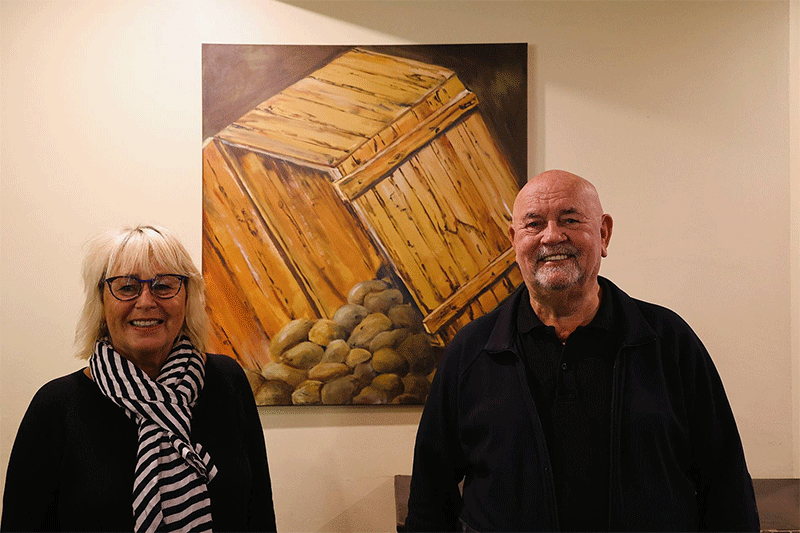
For the agricultural sector, the ultimate validation of a crop’s value often happens not in the field, but in the marketplace. The 20-year success story of the “Kartoffel-Restaurant Kiste” (Potato Restaurant Crate) in Trier, Germany, provides a compelling narrative on robust consumer demand for the humble potato. Founded by Harry and Kerstin Betz in 2005, the restaurant has built its entire identity around the versatility of the potato, serving everything from appetizers to desserts. This concept immediately resonated, with the restaurant serving 200 meals on its very first day without any advertising. At its pre-pandemic peak, the establishment was serving a remarkable 2,000 meals per day, a volume that underscores a deep and sustained public appetite for innovative potato-based cuisine.
The operational success of the “Potato Crate” offers lessons in scalability and efficiency. Owner Harry Betz, a 56-year industry veteran, credits a strict “Mise en place” philosophy—preparing and organizing all ingredients and tools in advance—for enabling the kitchen to handle such high volume smoothly, including up to 500 schnitzels on a single Saturday. This logistical excellence has allowed the business to grow its team from 35 to over 100 employees. The restaurant’s appeal extends beyond local patrons, consistently attracting an international clientele from Luxembourg and the Netherlands, often through word-of-mouth recommendations. This aligns with broader EU potato consumption trends; despite fluctuations, the European potato processing market remains strong, driven by demand for diverse and high-quality products. The restaurant’s menu, which creatively features the potato as the star, directly taps into this trend, demonstrating a successful model of value-added agriculture that benefits both the producer and the end-consumer.
The enduring success of the “Potato Crate” restaurant is more than a heart-warming local story; it is a market-driven testament to the potato’s potential. For growers, agronomists, and industry stakeholders, it highlights a critical pathway to sustainability: moving beyond commodity production towards fostering markets that celebrate the crop’s versatility. By demonstrating strong consumer willingness to pay for innovative potato dishes, this 20-year-old business case reinforces the importance of connecting agricultural production with culinary entrepreneurship, ultimately creating a more resilient and profitable value chain for one of the world’s most vital food crops.
